
Quick answer
This guide explains when france made the day 10 hours long in plain language, with the exact figures and how to work them out yourself.
- Today
- Sunday, 1 November 2026 · ISO week 44 · day 305 of the year
Computed on every visit from the time-zone database and standard astronomical formulas, so these never go stale. The article below is unchanged.
The 1793 Decree: Decimalizing the Clock
In November 1793 (4 Brumaire, Year II under the revolutionary calendar), France’s National Convention enacted a decree that overhauled timekeeping. Having already decimalized length (the meter), mass (the kilogram), and currency (the franc), the Revolutionary government targeted the sexagesimal clock inherited from ancient Babylonia.
The decree defined the civil day from midnight to midnight as 10 hours. Each hour was divided into 100 decimal minutes, and each decimal minute into 100 decimal seconds. Midnight occurred at 10:00 (or 0:00), solar noon at 5:00, and every fraction of the day aligned neatly with base-10 arithmetic.
Mathematical Breakdown: Standard Time vs. Decimal Time
To understand the mechanics of the system, it helps to compare standard sexagesimal units with French decimal time units. A standard day contains 24 hours, 1,440 minutes, or 86,400 seconds. A French decimal day contains 10 decimal hours, 1,000 decimal minutes, or 100,000 decimal seconds.

Because the total duration of a solar day remains unchanged, every decimal unit covers a longer or shorter duration than its conventional equivalent:
| Time Unit | Fraction of Day | Standard Equivalent | Total Standard Seconds |
|---|---|---|---|
| 1 Decimal Second | 1/100,000 (0.00001) | 0.864 standard seconds | 0.864 s |
| 1 Decimal Minute | 1/1,000 (0.001) | 1 minute, 26.4 seconds | 86.4 s |
| 1 Decimal Hour | 1/10 (0.100) | 2 hours, 24 minutes | 8,640 s |
| 1 Decimal Day | 1.000 | 24 hours | 86,400 s |
Because a decimal hour represents 144 standard minutes, periods of time sound deceptively small in decimal notation. A typical 8-hour workday corresponds to roughly 3.33 decimal hours, while a 30-minute lunch break lasts roughly 20.8 decimal minutes.
How to Calculate Decimal Time Manually
Converting standard time to decimal time requires calculating the elapsed fraction of the day from midnight. Follow these exact steps:
Step-by-Step Conversion: Standard to Decimal Time
- Convert standard time to total standard seconds: Multiply standard hours by 3,600, standard minutes by 60, and add standard seconds.
- Find the day fraction: Divide total standard seconds by 86,400.
- Determine decimal hours: Multiply the day fraction by 10.
- Determine decimal minutes and seconds: The digits after the decimal point represent decimal minutes (first two digits) and decimal seconds (next two digits).
Worked Conversion Examples
Example 1: Morning Coffee at 08:24:00 AM
- Total standard seconds: (8 × 3,600) + (24 × 60) + 0 = 28,800 + 1,440 = 30,240 seconds.
- Day fraction: 30,240 ÷ 86,400 = 0.35 of a day.
- Decimal calculation: 0.35 × 10 = 3.5000 decimal hours.
- Decimal Time: 3 hours, 50 decimal minutes (3:50).
Example 2: Afternoon Meeting at 03:36:00 PM (15:36:00)
- Total standard seconds: (15 × 3,600) + (36 × 60) + 0 = 54,000 + 2,160 = 56,160 seconds.
- Day fraction: 56,160 ÷ 86,400 = 0.65 of a day.
- Decimal calculation: 0.65 × 10 = 6.5000 decimal hours.
- Decimal Time: 6 hours, 50 decimal minutes (6:50).
Example 3: Standard Evening at 06:00:00 PM (18:00:00)
- Total standard seconds: (18 × 3,600) = 64,800 seconds.
- Day fraction: 64,800 ÷ 86,400 = 0.75 of a day.
- Decimal calculation: 0.75 × 10 = 7.5000 decimal hours.
- Decimal Time: 7 hours, 50 decimal minutes (7:50).
Step-by-Step Conversion: Decimal to Standard Time
To convert a decimal reading back to standard clock time:
- Divide the decimal hour value by 10 to obtain the decimal fraction of the day.
- Multiply that fraction by 86,400 to find the total standard seconds since midnight.
- Divide total seconds by 3,600 to get standard hours, use the remainder to find standard minutes (divided by 60), and retain the final remainder as standard seconds.
The French Republican Calendar: Structure and the 10-Day Week
Decimal time was paired with a complete restructuring of the calendar. Introduced under the guidance of politician Fabre d’Églantine and mathematician Gaspard Monge, the French Republican Calendar reorganized the year to eliminate religious associations and standardise monthly lengths.
Calendar Structure
- 12 Months of 30 Days: Divided into four seasonal groups of three months each:
- Autumn: Vendémiaire (Vintage), Brumaire (Fog), Frimaire (Frost)
- Winter: Nivôse (Snow), Pluviôse (Rain), Ventôse (Wind)
- Spring: Germinal (Seed), Floréal (Blossom), Prairial (Meadow)
- Summer: Messidor (Harvest), Thermidor (Heat), Fructidor (Fruit)
- 3 Décades per Month: Each 30-day month was split into three 10-day periods called décades, replacing the 7-day week. Days were named numerically: Primidi, Duodi, Tridi, Quartidi, Quintidi, Sextidi, Septidi, Octidi, Nonidi, and Décadi.
- 5 or 6 Complementary Days: Added at the end of the year (around mid-September) to match the solar year of ~365.24 days. Called sans-culottides, these days were designated national holidays celebrating virtue, talent, labor, convictions, and rewards.
Why the System Failed: Who the Advice and Scheme Disadvantaged
Decimal time lasted officially as a mandatory requirement for less than eighteen months (from November 1793 until its suspension in April 1795). While mathematically clean, the implementation encountered immediate practical and social barriers.
1. Working Class Resistance
Under the Gregorian calendar, workers received one rest day every seven days (Sunday). Under the Republican calendar, rest was granted only on Décadi—the tenth day of each décade. Workers were forced to labor nine consecutive days between rest days instead of six, generating deep resentment across rural and urban labor markets.
2. Severe Technical and Financial Cost
In the 1790s, time was kept by mechanical clockwork, pendulum grandfather clocks, and church bells. Converting an existing clock to decimal time required replacing escapements, gear trains, and clock faces. Rewiring public clocks across thousands of French towns was economically prohibitive during a period of warfare and inflation.
3. Disruption to Navigation and International Trade
Navigators depended on astronomical almanacs, tables of lunar distances, and marine chronometers measured in 24-hour sexagesimal time. A quarter-circle of arc (90 degrees) corresponded directly to 6 hours of solar displacement (15 degrees per standard hour). Shifting France to 10 decimal hours isolated French shipmasters and foreign traders, introducing dangerous conversion errors into maritime navigation.
Practical Compromises: Dual-Dial Clocks
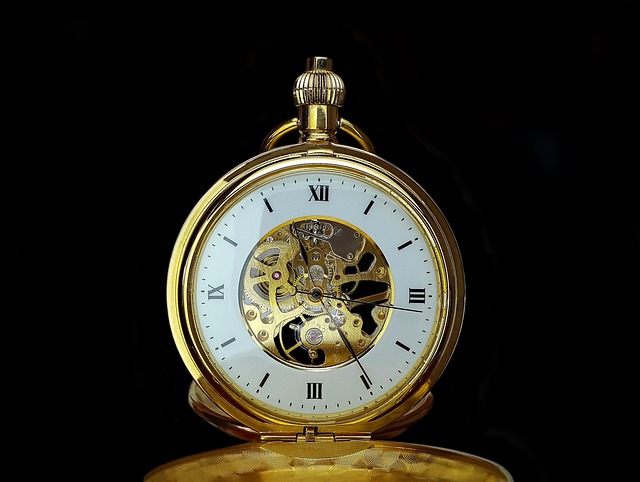
To ease the transition, clockmakers produced dual-dial watches and clocks. These featured two concentric chapters or separate dials: one showing 10 decimal hours and the other showing traditional 12-hour or 24-hour numerals. While elegant, these timepieces proved that users were constantly converting back to standard time rather than adopting decimal thinking natively.
Modern Survival: Decimal Time in Astronomy and Computing
Although decimal time failed as a civil standard, its core principle survived in technical domains where base-10 calculation simplifies complex math.

Astronomical Julian Dates
Astronomers calculate celestial mechanics using the Julian Date (JD) system, which counts elapsed days continuously from January 1, 4713 BCE. Rather than recording hours, minutes, and seconds, time within a day is recorded as a decimal fraction. For example, an observation at 18:00 UTC is logged precisely as standard day fraction .75. This decimal approach powers astronomical ephemerides and solar trajectory models.
Computer Timestamps and Spreadsheets
Modern software platforms model calendar dates as decimal floating-point numbers. In Microsoft Excel, Google Sheets, and financial databases, integer values represent whole days elapsed from an epoch date, while decimal fractions represent the precise time of day (e.g., 0.5 represents 12:00 PM, while 0.75 represents 6:00 PM).
Swatch Internet Time (1998)
In 1998, watchmaker Swatch introduced “Internet Time,” dividing the day into 1,000 equal units called “.beats” (each equivalent to 1 minute, 26.4 seconds). It designated Biel, Switzerland as the meridian anchor (@000 .beats at midnight CET). Marketing aimed to create a universal timestamp for global chat rooms, eliminating time zones. However, without adoption by major operating systems or international standards bodies, the concept remained a temporary marketing novelty.
Lessons in Standardization: Consensus vs. Confusion
Historians of measurement point to French decimal time as the benchmark case of standard-setting failure. Measurement systems succeed when they eliminate regional confusion; they fail when they attempt to overturn universal consensus.
The metric meter succeeded because pre-revolutionary France suffered under dozens of competing local definitions of the toise, pied, and pouce. By contrast, the 24-hour day and 7-day week were already unified across Europe and global trade networks. Today, time utilities on itsdately.com calculate durations using the universal sexagesimal standard, reflecting centuries of unbroken usage.
Frequently asked questions
When was decimal time officially introduced and suspended in France?
Decimal time was officially decreed by the National Convention on November 24, 1793 (4 Brumaire, Year II). Due to widespread technical and social opposition, its mandatory enforcement was suspended on April 7, 1795 (18 Ventôse, Year III). The associated Republican calendar remained in official use until Napoleon Bonaparte abolished it on January 1, 1806.
How do you convert standard 24-hour time to decimal time manually?
Convert your standard time into total elapsed seconds from midnight (Hours × 3600 + Minutes × 60 + Seconds). Divide that total by 86,400 to find the fraction of the day, then multiply by 10. For example, 12:00 PM equals 43,200 seconds ÷ 86,400 = 0.5, which equals 5.0 decimal hours.
Why was the 10-day décade so unpopular with workers?
The 10-day décade replaced the traditional 7-day week. Instead of working 6 days followed by Sunday rest, workers had to work 9 consecutive days before receiving a rest day on Décadi. This increased labor demands by reducing rest days from roughly 52 per year to 36.
Do scientists or computers use decimal time today?
Yes. Astronomers use continuous Julian Dates with decimal day fractions (e.g., .75 for 18:00 UTC) to perform orbit calculations without dealing with standard time units. Computer databases and spreadsheet programs also store dates as integer counts and time as decimal fractions of a day.
Related on itsdately: Where the Month Names Come From: Gods, Emperors, and a Counting Error · Why Days Are Named After Planets and Gods · Why Does a Week Have Seven Days?
Further reading: Encyclopaedia Britannica — Calendar.
Related read: What Is a Fortnight? The 14-Day Word That Refuses to Fade.