
- Today
- Saturday, 31 October 2026 · ISO week 44 · day 304 of the year
Computed on every visit from the time-zone database and standard astronomical formulas, so these never go stale. The article below is unchanged.
El Paso, Texas, operates in the Mountain Time Zone, keeping its clocks exactly one hour behind the rest of Texas, including cities like Dallas, Houston, and Austin. Currently observing Mountain Daylight Time (UTC-6), the city switches to Mountain Standard Time (UTC-7) each November.
This guide details why El Paso is geographically and legally positioned in Mountain Time rather than Central Time, how Daylight Saving Time functions locally, and how time synchronization works with neighboring Ciudad Juárez and southern New Mexico. You will also find simple offset comparisons for coordinating schedules across major U.S. time zones.
What Time Is It in El Paso, Texas? Mountain Time Explained
El Paso, Texas, is in the Mountain Time Zone, currently observing Mountain Daylight Time (MDT, UTC-6) until November 1, 2026, when it switches to Mountain Standard Time (MST, UTC-7). This keeps El Paso exactly one hour behind the rest of Texas, including Dallas, Houston, and Austin, which observe Central Time.
Because Texas spans nearly 800 miles from east to west, most of the state sits comfortably inside the Central Time Zone, while its westernmost tip operates on a completely different clock. If you are flying into El Paso International Airport, scheduling a conference call with a state agency in Austin, or coordinating freight across the Mexican border, miscalculating this one-hour offset is the most common reason for missed appointments and delayed shipments. Understanding how El Paso’s clock functions requires looking at its geographical position, federal time regulations, and its daily connection with surrounding regions in New Mexico and Mexico.
Why is El Paso in the Mountain Time Zone when most of Texas is Central?
El Paso’s position in the Mountain Time Zone is a matter of physical geography and natural solar alignment. The city sits at approximately 106.48° West longitude. Standard time meridians in North America are set every 15 degrees of longitude, corresponding to one hour of Earth’s rotation. The central meridian for the Mountain Time Zone is 105° West, which runs just east of Denver, Colorado, and through central New Mexico. Because El Paso lies less than 1.5 degrees from the 105° West meridian, local solar noon in El Paso occurs within minutes of official clock noon under Mountain Standard Time.
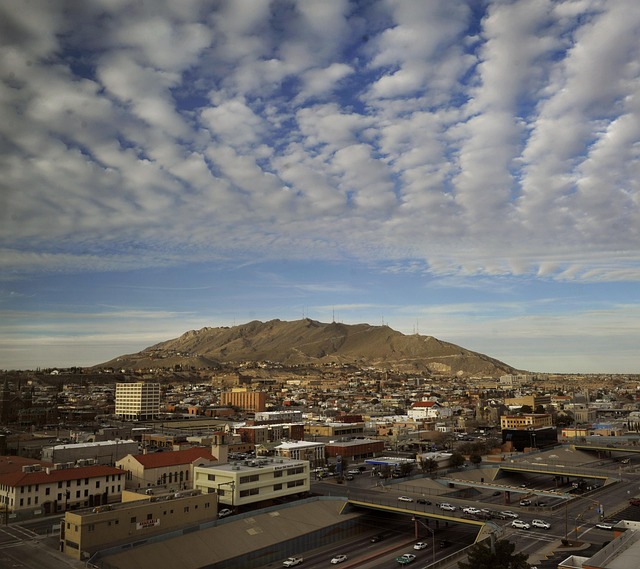
In contrast, the Central Time Zone is centered on the 90° West meridian, which passes near Memphis, Tennessee. If El Paso were forced to use Central Time alongside Dallas or Houston, its solar clock would be severely misaligned. Under Central Time, the sun in El Paso would not reach its highest point in the sky until past 1:00 PM standard time, pushing winter sunrises past 8:00 AM and summer sunsets near 9:30 PM. To prevent these distorted light patterns, federal authorities placed the El Paso region in Mountain Time.
The administrative authority behind this choice dates back to the early 20th century. Standardized time zones were initially created by railroad companies in 1883 and codified by Congress under the Standard Time Act of 1918. Regulatory oversight was originally handled by the Interstate Commerce Commission (ICC) before being transferred to the federal government’s transportation department. Today, The DOT governs time zone boundaries and DST observance under the Uniform Time Act. When formal boundary lines were established, El Paso’s strong commercial, rail, and cultural connections to New Mexico made grouping it with the Mountain West the most logical decision.
El Paso County is not entirely alone in this designation. Adjacent Hudspeth County and a northwestern portion of Culberson County (surrounding Pine Springs and Guadalupe Mountains National Park) also observe Mountain Time. Together, these counties form the only portion of Texas operating outside the Central Time Zone.
How Daylight Saving Time works in El Paso
Like the vast majority of Texas and the United States, El Paso observes Daylight Saving Time. The annual transition follows federal law, shifting clocks forward on the second Sunday in March and turning them back on the first Sunday in November.
During the warmer months of the year, El Paso uses Mountain Daylight Time (MDT), which carries a offset of UTC-6. When the seasonal adjustment concludes in autumn, the city steps back to Mountain Standard Time (MST), shifting its offset to UTC-7. The exact transition rules involve specific clock adjustments at 2:00 AM local time:
- Spring forward: On the second Sunday in March at 2:00 AM, clocks skip ahead to 3:00 AM local daylight time, shortening the day to 23 hours.
- Fall back: On the first Sunday in November at 2:00 AM, clocks shift back to 1:00 AM local standard time, repeating that hour and creating a 25-hour day.
For the calendar year 2026, the local time changes follow this schedule:
- March 8, 2026: Daylight Saving Time began at 2:00 AM MST, advancing clocks to 3:00 AM MDT (UTC-6).
- November 1, 2026: Daylight Saving Time ends at 2:00 AM MDT, setting clocks back to 1:00 AM MST (UTC-7).
A frequent source of confusion for travelers in the Southwest involves neighboring Arizona. Most of Arizona chooses not to observe Daylight Saving Time and remains on Mountain Standard Time (UTC-7) all year. Consequently, El Paso and Phoenix share the exact same local time during the winter months (from November to March). However, when El Paso shifts to MDT in March, it becomes one hour ahead of Phoenix until November. Anyone driving west from El Paso into Arizona during the summer must adjust their clock back one hour upon crossing state lines.
Border time dynamics: El Paso, Ciudad Juárez, and southern New Mexico
El Paso does not operate in isolation; it forms a single binational metropolitan economy with Ciudad Juárez, Chihuahua, in Mexico, and shares a contiguous urban corridor with southern New Mexico. Millions of people, commercial trucks, and daily commuters cross the international border and state lines across the Paso del Norte region. Maintaining synchronized time across these jurisdictions is vital for international manufacturing plants (maquiladoras), customs processing, and school schedules.
In 2022, the federal government of Mexico enacted a law eliminating nationwide Daylight Saving Time. However, recognizing the deep economic ties between border cities and their American counterparts, Mexican law established an explicit exception for municipalities along the northern border strip. The municipality of Juárez was permitted to keep its time zone aligned with El Paso. As a result, Ciudad Juárez changes its clocks on the exact same dates and hours as El Paso, staying on MDT (UTC-6) in the summer and MST (UTC-7) in the winter.
Similarly, northern neighbors in Doña Ana County, New Mexico—including Las Cruces, Sunland Park, and Anthony—are firmly inside the Mountain Time Zone. Someone living in Las Cruces and commuting to work in downtown El Paso or Fort Bliss experiences no time change across state lines. This regional alignment ensures that transit systems, healthcare networks, and cross-border trade operate without time-driven friction.
Coordinating schedules across Texas and other time zones
When working across state lines or coordinating with central corporate headquarters, calculating time offsets relative to El Paso is straightforward if you keep standard baseline shifts in mind. Because El Paso is in Mountain Time, it sits between Pacific Time to the west and Central Time to the east.

The time relationship between El Paso and the rest of Texas remains fixed year-round. Because both Mountain Time and Central Time observe Daylight Saving Time on identical schedules, El Paso is always exactly one hour behind cities like Dallas, Fort Worth, Houston, Austin, and San Antonio. When corporate headquarters in Houston schedules a conference call for 10:00 AM Central Time, team members in El Paso must join at 9:00 AM local time.
Here is how El Paso compares with major United States time zones throughout the year:
- Pacific Time (Los Angeles, Seattle): El Paso is 1 hour ahead of Pacific Time year-round. When it is 12:00 PM in Los Angeles, it is 1:00 PM in El Paso.
- Mountain Time (Denver, Salt Lake City): El Paso shares the exact same time as Denver, Salt Lake City, and Albuquerque at all times.
- Central Time (Dallas, Chicago, New Orleans): El Paso is 1 hour behind Central Time year-round. When it is 12:00 PM in Dallas or Chicago, it is 11:00 AM in El Paso.
- Eastern Time (New York, Atlanta, Miami): El Paso is 2 hours behind Eastern Time year-round. When it is 12:00 PM in New York, it is 10:00 AM in El Paso.
The following table provides a direct comparison of local clock times across major American hubs when it is 12:00 PM noon in El Paso during both Daylight Saving Time and Standard Time periods.
| City / Region | Time Zone Observed | UTC Offset | Local Time when El Paso is 12:00 PM Noon |
|---|---|---|---|
| El Paso, TX | Mountain Time (MDT / MST) | UTC-6 / UTC-7 | 12:00 PM |
| Dallas / Houston, TX | Central Time (CDT / CST) | UTC-5 / UTC-6 | 1:00 PM |
| Denver, CO | Mountain Time (MDT / MST) | UTC-6 / UTC-7 | 12:00 PM |
| Phoenix, AZ | Mountain Standard Time (No DST) | UTC-7 year-round | 11:00 AM (Mar–Nov) / 12:00 PM (Nov–Mar) |
| Los Angeles, CA | Pacific Time (PDT / PST) | UTC-7 / UTC-8 | 11:00 AM |
| New York, NY | Eastern Time (EDT / EST) | UTC-4 / UTC-5 | 2:00 PM |
For international coordination beyond North America, standard offset calculations apply directly to UTC. For example, during global operations where standard offsets are used, tracking different international regional norms is essential; see Somalia Time Explained: Navigating Eastern Africa’s Consistent Clock for more on global timezone offset rules. While North American schedules shift in March and November, regions without seasonal updates remain static, similar to how Somalia Time Zone Explained: EAT and No DST in 2026 operates on East Africa Time without daylight shifts.
How Mountain Time affects daily light and schedules in El Paso
Living in the westernmost corner of a state while belonging to the Mountain Time Zone provides El Paso with a distinct lighting dynamic throughout the year. Because the city is located near the eastern boundary of the Mountain Time Zone geographical band, daylight hours are naturally proportioned without extreme morning darkness or excessively late evening sunsets.
During summer peak months in June and July, sunrise in El Paso occurs around 6:00 AM MDT, and sunset takes place around 8:15 PM MDT. This extra evening daylight suits outdoor activities, evening sports leagues, and hiking in the Franklin Mountains, which run directly through the center of the city. Outdoor labor and military training at Fort Bliss often start early in the morning to finish before the hottest hours of the afternoon, taking full advantage of post-dawn temperatures.
In mid-winter, under Mountain Standard Time, sunrise occurs near 7:00 AM MST, while sunset arrives around 5:00 PM MST. If El Paso were shifted to Central Time, winter sunrises would push past 8:00 AM, forcing school children to wait for buses and commuters to travel in total darkness. You can review full astronomical solar charts and daylight variations on TimeandDate.com provides precise sunrise and sunset data for El Paso.
Tools and best practices for checking El Paso time
To avoid scheduling errors when arranging remote business, legal filings, or travel itineraries connected to El Paso, rely on reliable digital conversion approaches:

- Use automated device settings: Modern smartphones, laptops, and computer operating systems automatically update local time using Network Time Protocol (NTP). Ensure your device settings have “Set time zone automatically” turned on, or select “El Paso (Mountain Time)” specifically rather than relying on state-level assumptions.
- Specify time zone abbreviations in invitations: Never list a time simply as “9:00 AM” in cross-state correspondence. Explicitly write “9:00 AM MDT” or “9:00 AM El Paso Time” so remote attendees recognize the offset immediately.
- Rely on web-based clocks: When verifying real-time clock seconds or confirming whether standard time is currently active, Websites dedicated to time zones, such as time.is or 24timezones.com, provide live, constantly updated clocks that reflect accurate local shifts.
- Configure calendar application zones: Calendar platforms such as Google Calendar, Microsoft Outlook, and Apple Calendar allow you to set an explicit time zone for individual events. When creating an invitation for an El Paso contact, set the event location time zone to “America/Denver” or “El Paso.” The software will convert the meeting time on the recipient’s display to match their home clock automatically.
Pros and cons of El Paso’s Mountain Time position
Being the primary metropolitan area in Texas on Mountain Time offers tangible advantages along with clear operational challenges.
Advantages
- Natural solar alignment: Solar noon matches clock noon far more closely than it would under Central Time, keeping daylight hours balanced for morning commutes and evening recreation.
- Regional border cohesion: Matching clock times with southern New Mexico and Ciudad Juárez ensures smooth daily transit for thousands of workers, students, and trade vehicles.
- Evening recreation: Summer evening daylight allows outdoor commerce, dining, and park access well into the evening hours.
Disadvantages
- State government coordination friction: State agencies, courts, and legislative offices headquartered in Austin operate on Central Time, giving El Paso residents a shorter daily window to handle state administrative business.
- Broadcast TV confusion: National television broadcasts and live sporting events scheduled for Central Time air one hour earlier in El Paso, catching unprepared viewers off guard.
- Traveler mistakes: Visitors driving west across Texas along Interstate 10 often fail to realize they cross from Central Time into Mountain Time near the Hudspeth/Culberson county line, causing missed hotel check-ins or flight connections.
Frequently asked questions
What is the exact time zone for El Paso, Texas?
El Paso, Texas, is located in the Mountain Time Zone. It observes Mountain Daylight Time (MDT, UTC-6) during Daylight Saving Time from March to November, and Mountain Standard Time (MST, UTC-7) during the winter months.
Why is El Paso on Mountain Time while the rest of Texas is on Central Time?
El Paso lies far to the west at 106.48° W longitude, making it naturally aligned with the Mountain Time meridian (105° W). Federal regulators placed El Paso in Mountain Time to preserve reasonable sunrise and sunset hours and to maintain economic synchronization with neighboring New Mexico.
How many hours behind Dallas is El Paso?
El Paso is always exactly one hour behind Dallas, Houston, Austin, and San Antonio. Because both regions observe Daylight Saving Time on identical dates, this one-hour difference remains constant throughout the entire year.
Does Ciudad Juárez observe the same time zone as El Paso?
Yes, Ciudad Juárez observes the same time zone and Daylight Saving Time schedule as El Paso. Although Mexico revised its national daylight saving laws in 2022, border municipalities like Juárez were explicitly permitted to remain synchronized with their adjacent American sister cities to support international trade and cross-border commuting.
Is all of El Paso County on Mountain Time?
Yes, all of El Paso County is in the Mountain Time Zone. Nearby Hudspeth County and the northwestern corner of Culberson County also observe Mountain Time, making them the only parts of Texas outside Central Time.

About Yasir Hafeez
Yasir Hafeez is the creator of itsdately a free, independent site for clear world time, calendars, and date tools.