
- Today
- Sunday, 1 November 2026 · ISO week 44 · day 305 of the year
Computed on every visit from the time-zone database and standard astronomical formulas, so these never go stale. The article below is unchanged.
A day on other planets ranges from under 10 Earth hours on Jupiter to 243 Earth days on Venus. While Mars matches Earth closely at 24 hours and 37 minutes, gas and ice giant days span 10 to 17 hours, and Mercury takes 176 Earth days for one solar day.
Understanding how planetary spin varies across the solar system helps explain atmospheric circulation, temperature extremes, and the mechanics of planetary formation. A planet’s rotational period determines how long its surface is exposed to solar radiation, driving weather systems, magnetic fields, and planetary shape. While humans experience a reliable 24-hour cycle, extraterrestrial days operate on dramatically different scales that influence spacecraft engineering and astronomical observation.
What is the difference between a solar day and a sidereal day?
When measuring planetary rotational cycles, astronomers distinguish between two distinct definitions of a day: the sidereal day and the solar day. A sidereal day is the time required for a planet to complete one full 360-degree rotation on its axis relative to fixed background stars. This represents the planet’s physical rotation speed.
A solar day is the time it takes for the Sun to return to the exact same position in the sky, such as from one solar noon to the next. The solar day dictates the natural daylight and darkness cycle experienced on a planet’s surface.
Because a planet orbits the Sun while simultaneously spinning on its axis, it advances along its orbital path during each rotation. To line up with the Sun again, the planet must rotate slightly more than 360 degrees. On Earth, this extra movement takes about 3 minutes and 56 seconds. That is why Earth’s sidereal day is 23 hours, 56 minutes, and 4 seconds, whereas our standard solar day is 24 hours long. The difference between these two measures is minor on Earth, but on planets with slow spins or fast orbits, solar and sidereal days diverge drastically.
How long is a day on Mercury?
Mercury experiences one of the most unusual daytime cycles in the solar system. Its sidereal rotation takes 58 Earth days, 15 hours, and 30 minutes (about 58.6 Earth days). Meanwhile, its solar day—the time between consecutive sunrises—lasts approximately 176 Earth days (4,224 hours).
For decades, astronomers believed Mercury was tidally locked to the Sun in a 1:1 ratio, keeping the same side facing solar glare forever. Radar measurements made in 1965 revealed that Mercury exists in a 3:2 spin-orbit resonance instead. Mercury rotates on its axis three times for every two completed orbits around the Sun. Because Mercury orbits the Sun every 88 Earth days, this 3:2 coupling stretches its solar day to twice the length of its orbital year.
This slow rotation leads to extreme surface conditions. Mercury’s daylight side heats up to 430°C (800°F), while the night side plummets to -180°C (-290°F). Near perihelion (closest approach to the Sun), Mercury’s orbital speed temporarily exceeds its rotation speed. An observer on the surface would see the Sun rise, stop, reverse direction across the sky, stop again, and then continue toward setting. This double sunrise phenomenon presents unique thermal management challenges for solar-powered planetary landers.
How long is a day on Venus?
Venus holds the record for the longest day in our solar system. Its sidereal rotation period takes 243 Earth days (5,832 hours). Venus orbits the Sun in 225 Earth days, meaning its axial rotation takes longer than its orbital period around the Sun.
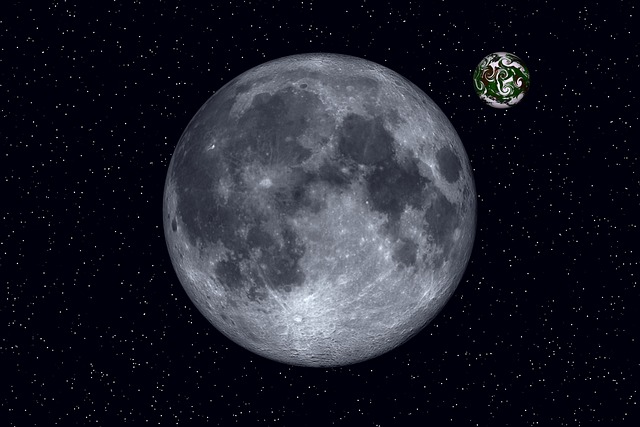
Venus is also an anomaly because of Venus’s retrograde rotation. It rotates on its axis in the opposite direction compared to Earth and most other planets. If you could stand on the surface of Venus, the Sun would rise in the west and set in the east.
Because Venus spins backward while orbiting forward around the Sun, its orbital motion and axial rotation combine to shorten its solar day relative to its sidereal period. A single solar day on Venus lasts 116.8 Earth days (2,802 hours). Massive ancient collisions or strong atmospheric thermal tides from the Sun are primary explanations for its slow backward spin.
How long is a day on Mars?
Mars possesses a daytime cadence that closely matches Earth’s schedule. A solar day on Mars, known as a “sol,” lasts 24 hours, 37 minutes, and 22 seconds. Its sidereal day is only slightly shorter, at 24 hours, 37 minutes, and 22.6 seconds.
Mars’s axial tilt sits at 25.2 degrees, which is remarkably close to Earth’s 23.4 degrees. This orientation produces distinct seasonal cycles alongside its familiar day-night duration. The primary difference lies in the length of Martian years, which span 687 Earth days, doubling the duration of each season.
This near-matching cycle offers clear operational advantages for robotic missions. Mission planners controlling rovers like Curiosity and Perseverance sync their work schedules directly to Martian time. Because a sol is 39 minutes longer than an Earth day, engineering teams shift their sleep and work schedules by 39 minutes each calendar day. Solar-powered spacecraft must store power during daytime light to survive overnight surface drops reaching -73°C (-100°F).
How long is a day on Jupiter?
Jupiter has the shortest day of any planet in the solar system. It completes one sidereal rotation in just 9 hours, 55 minutes, and 30 seconds.
Because Jupiter is a gas giant composed primarily of hydrogen and helium, it lacks a solid surface. Its fluid outer layers display differential rotation, where equatorial regions spin faster than higher polar latitudes. Atmospheric cloud bands at the equator complete a rotation in 9 hours and 50 minutes (designated System I), while higher latitude cloud bands take 9 hours and 55 minutes (System II).
To define Jupiter’s true internal rotation period, astronomers track System III. System III measures the rotation of Jupiter’s deep magnetic field, which is anchored to its metallic hydrogen mantle. This internal rate is fixed at 9 hours, 55 minutes, and 29.7 seconds.
This high-speed rotation generates massive centrifugal forces that bulge Jupiter’s equator outwards. Its equatorial diameter is roughly 9,280 kilometers wider than its polar diameter, creating a visibly flattened shape known as an oblate spheroid. The rapid spin also powers relentless atmospheric jet streams and long-lived planetary storms, including the Great Red Spot.
How long is a day on Saturn?
Saturn completes one full rotation on its axis in approximately 10 hours, 33 minutes, and 38 seconds. Like Jupiter, Saturn spins rapidly, causing its fluid body to flatten at the poles and bulge at its equator.
Measuring Saturn’s exact day length was historically difficult for astronomers. As a gas giant, Saturn lacks physical surface marks, and its thick upper atmosphere hides internal movements. Also, Saturn’s magnetic axis aligns almost perfectly with its rotation axis, preventing simple radio signal tracking from revealing internal motion.
In 2019, scientists pinpointed Saturn’s rotation speed by analyzing wave dynamics in its ring system. Gravitational variations inside Saturn cause vibrations that travel into the rings, acting as a planetary seismograph. Ring wave measurements confirmed the interior rotation period of 10 hours, 33 minutes, and 38 seconds. This rapid rotation generates powerful zonal winds exceeding 1,600 kilometers per hour (1,000 miles per hour) near Saturn’s equator.
How long is a day on Uranus?
Uranus completes one sidereal rotation in 17 hours, 14 minutes, and 24 seconds. It is classified as an ice giant, composed mainly of water, ammonia, and methane icy fluids surrounding a small rocky core.

What makes time on Uranus unique is its dramatic axial tilt of 97.8 degrees. Uranus rotates almost entirely on its side relative to its orbital plane. Scientists theorize that early in solar system history, Uranus collided with a protoplanet roughly the size of Earth, knocking the planet onto its side.
This extreme side-tilt produces extraordinary seasonal day cycles over its 84-Earth-year orbit around the Sun. At the poles, one continuous daylight period lasts 42 Earth years, followed by 42 Earth years of total dark winter. Near the equator, rapid 17-hour day-night cycles persist, but daylight angle shifts drastically as the planet moves along its orbit.
How long is a day on Neptune?
Neptune completes one sidereal rotation in 16 hours, 6 minutes, and 36 seconds. It is the farthest acknowledged major planet in our solar system, completing one orbit around the Sun every 165 Earth years.
Neptune’s rapid 16-hour rotation rate was verified using radio measurements gathered by Voyager 2 and precise infrared monitoring of cloud structures with Hubble space observations. Like Jupiter and Saturn, Neptune exhibits strong differential rotation; its equatorial atmosphere rotates slower than its higher latitude atmosphere, contrasting with Jupiter’s spin profile.
Neptune’s quick rotational speed combined with internal heat leaks drives the fastest recorded atmospheric winds in the solar system. Winds near its equator reach speeds over 2,100 kilometers per hour (1,300 miles per hour), churning dark storm systems and high-altitude frozen methane clouds across short 16-hour rotational cycles.
Comparing day lengths across the solar system
A side-by-side comparison highlights the vast differences in rotation speed across solar system bodies. Inner rocky planets generally spin much slower than outer fluid giants.
| Planet | Solar Day Length | Sidereal Rotation Period | Orbital Period (Year) |
|---|---|---|---|
| Mercury | 176 Earth days | 58.6 Earth days | 88 Earth days |
| Venus | 116.8 Earth days | 243 Earth days | 225 Earth days |
| Earth | 24 hours | 23 hours, 56 minutes, 4 seconds | 365.25 Earth days |
| Mars | 24 hours, 37 minutes | 24 hours, 37 minutes, 22 seconds | 687 Earth days |
| Jupiter | 9 hours, 56 minutes | 9 hours, 55 minutes, 30 seconds | 11.86 Earth years |
| Saturn | 10 hours, 33 minutes | 10 hours, 32 minutes, 35 seconds | 29.45 Earth years |
| Uranus | 17 hours, 14 minutes | 17 hours, 14 minutes, 24 seconds | 84 Earth years |
| Neptune | 16 hours, 6 minutes | 16 hours, 6 minutes, 36 seconds | 164.8 Earth years |
The primary factor dividing these two groups is planet composition and mass. Large gas and ice giants preserved significant angular momentum from the early solar nebula, spinning rapidly despite their size.
What causes planetary rotation speeds to vary?
The broad spectrum of planetary day lengths stems from specific physical mechanisms acting during formation and over billions of years of evolution.
Conservation of angular momentum
Planets formed from a rotating disk of gas, dust, and rock surrounding the early Sun. As gravity collapsed this material into distinct planetary cores, the material spun faster to conserve angular momentum, similar to how an ice skater pulls their arms inward to increase spin speed. Planets that collected immense gas reserves (like Jupiter and Saturn) pulled in large amounts of mass, accelerating their internal rotation speeds.
Giant planetary impacts
During the solar system’s early formation phase, protoplanets frequently collided with each other. A catastrophic collision could dramatically alter a body’s rotation speed and axial orientation. Astronomers believe giant collisions were responsible for knocking Uranus onto its side (98-degree tilt), stripping Mercury’s outer crust, and slowing Venus down into a backward spin.
Gravitational tidal braking
Tidal forces exerted by stars or nearby moons slow down planetary rotation over long timelines. Mercury’s rotation rate was significantly altered by solar gravity, pulling it into a 3:2 spin-orbit resonance. Earth’s Moon exerts tidal drag on Earth’s oceans, gradually slowing our planetary spin by roughly 1.7 milliseconds per century. Billions of years ago, an Earth day lasted only 18 to 20 hours.
Atmospheric thermal tides
Thick planetary atmospheres generate torque that influences rotation. Sunlight heats dense atmospheres, creating thermal expansion and atmospheric pressure waves. On Venus, this atmospheric thermal tide exerts torque that acts against internal mantle spin, helping keep its rotational period extremely slow.
How do astronomers measure planetary day lengths?
Determining rotational periods across millions of kilometers requires specialized astronomical techniques suited to each planet’s physical environment.

- Optical Surface Tracking: For planets with clear, visible solid ground like Mars, astronomers track surface features—such as craters, volcanoes, or distinct dark terrain—and log how long those markers take to rotate back into view.
- Radar Mapping: Cloud-covered worlds like Venus hide their landforms from optical view. Spacecraft send radar pulses through cloud layers down to the ground. By recording how radar signals reflect off surface mountains and canyons, scientists build precise maps to calculate rotation speeds.
- Magnetosphere Radio Tracking: Gas giants lack solid surfaces and show shifting, variable atmospheric wind bands. Scientists measure periodic radio emissions generated by charged particles swirling inside planetary magnetic fields. According to NASA, these radio pulses directly reflect deep core rotation speeds.
- Ring Waves and Seismology: For Saturn, scientists study wave patterns produced inside planetary ring structures. Interior density vibrations alter gravitational pulls on ring particles, acting as sensitive indicators of deep core spin.
Common misconceptions about days on other planets
When studying extraterrestrial timekeeping, several recurring misunderstandings obscure clear astronomical facts.
Misconception: A planet’s rotational speed always matches its daylight cycle
Many assume that rotation time automatically equals the time between sunrises. While this assumption works reasonably well on Earth and Mars, it fails on slow-spinning planets. Venus takes 243 Earth days to complete one physical rotation, but its solar daylight cycle takes 117 Earth days due to retrograde movement around the Sun.
Misconception: Fast rotation means a planet has a short year
Rotation speed around an axis is independent of orbital speed around the Sun. Jupiter spins on its axis in under 10 hours, yet takes nearly 12 Earth years to complete one orbit around the Sun. Conversely, Venus has a solar day of 117 Earth days and a year lasting 225 Earth days.
Misconception: Gas giants experience sunrise and sunset on a solid horizon
Gas and ice giants do not have a solid boundary where a person could stand to watch a sunset. Their atmospheres gradually thicken with depth, transitioning from clouds into high-pressure fluid layers without a surface landform. Their day lengths describe internal rotational periods rather than surface daylight hours.
Tips for conceptualizing planetary day lengths
Relating alien daylight cycles to everyday human experience requires framing raw numbers around practical physical impacts.
- Compare by Proportions: Instead of counting total hours, think of planetary days as multiples of Earth experience. A solar day on Mercury lasts nearly half an Earth year, while Jupiter’s entire day-night cycle passes in less time than a standard night’s sleep.
- Look at Shape Distortions: High-speed rotations visibly deform fluid planets. Comparing equatorial bulges—such as Jupiter’s flattened poles—visually demonstrates how rapid rotational forces shape planet structures.
- Trace Space Mission Schedules: Reviewing how planetary lander teams operate provides practical insight into cosmic time. NASA engineers working on Mars rovers live on Martian time, shifting daily meetings 39 minutes later each calendar day to mirror the Martian sol.
Frequently asked questions
Which planet has the longest day?
Venus has the longest rotational day of any planet in our solar system, taking 243 Earth days to complete one full rotation. Because it rotates backward relative to its orbit, its solar day—from one sunrise to the next—lasts about 117 Earth days.
Which planet has the shortest day?
Jupiter has the shortest day of all eight major planets, completing one full rotation in just 9 hours, 55 minutes, and 30 seconds. This rapid spin causes Jupiter to bulge noticeably at its equator and flattens its poles.
What causes day length to vary so much between planets?
Planetary day lengths are determined by initial rotational energy during formation, gravitational tidal interactions with the Sun or moons, and major planetary collisions early in solar system history. Large gas giants accumulated more mass and preserved rapid rotation rates, whereas smaller terrestrial planets experienced stronger gravitational braking.
Is a sidereal day the same as a solar day?
No, a sidereal day measures the precise time a planet takes to rotate 360 degrees relative to distant stars. A solar day measures the time required for the Sun to return to the same position in the sky, which depends on both planetary rotation and orbital movement around the Sun.
How do scientists measure the day length of gas giants?
Because gas giants lack solid surfaces, scientists track the rotation of their deep internal magnetic fields using radio emissions picked up by interplanetary spacecraft. Astronomers also track persistent atmospheric features and model internal density variations through ring perturbations.

About Yasir Hafeez
Yasir Hafeez is the creator of itsdately a free, independent site for clear world time, calendars, and date tools.