- UTC right now
- 22:22:03 on Friday, 30 October 2026
- Today
- Friday, 30 October 2026 · ISO week 44 · day 303 of the year
Computed on every visit from the time-zone database and standard astronomical formulas, so these never go stale. The article below is unchanged.
Mainland China and Taiwan share the exact same time zone, which is UTC+8 year-round. This means when it is 3:00 PM in Beijing or Shanghai, it is also exactly 3:00 PM in Taipei and Kaohsiung.
Neither region observes Daylight Saving Time, so the eight-hour offset ahead of Coordinated Universal Time remains unchanged throughout the entire year. Whether you are coordinating cross-strait logistics, setting up international sales calls, or traveling between mainland hubs and Taiwanese cities, you do not need to adjust your watch when moving between the two regions. However, managing schedules across continents requires understanding local naming conventions, western geographic nuances in China, and how seasonal time shifts in North America and Europe affect your local offset.
Is Taiwan time the same as China time?
Clock readouts in Taiwan and mainland China are identical at all times. Both regions maintain a permanent standard time offset of UTC+8, meaning there is zero time difference between them.
In mainland China, the official standard is named Beijing Time (北京时间, Běijīng Shíjiān), internationally recognized as China Standard Time (CST). In Taiwan, Taiwan also observes the same UTC+8 offset, where the local government officially designates it as National Standard Time (NST). In historical texts and some software databases, Taiwan’s time is also listed as Chungyuan Standard Time or grouped under China Standard Time.
This full clock alignment simplifies cross-strait operations. Financial markets, aviation routes, high-speed rail networks, and corporate communications between commercial hubs like Shenzhen, Shanghai, Guangzhou, Taipei, and Kaohsiung operate on identical clock times. A flight departing Beijing at 10:00 AM arrives in Taipei relative to the same synchronized timeline.
Geographic reality: one time zone across five solar zones
Geographically, mainland China spans nearly 60 degrees of longitude, stretching from 73°E in western Xinjiang to 135°E in eastern Heilongjiang. Under natural solar alignment, a landmass of this scale would normally contain five distinct time zones, ranging from UTC+5 to UTC+9.
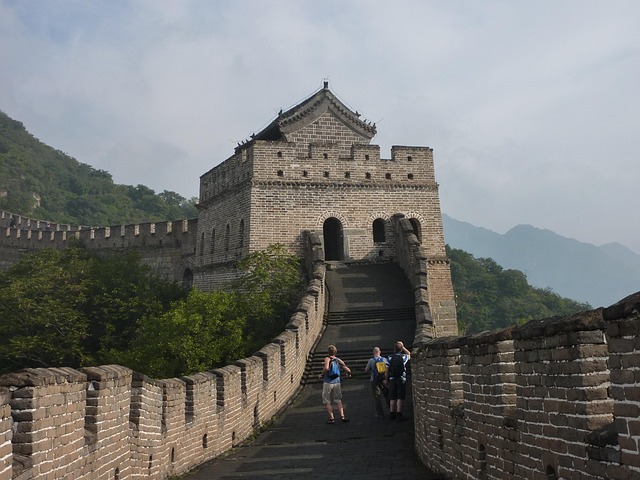
Since 1949, China has enforced a single national time standard based on the 120°E meridian (which runs near Hangzhou, east of Beijing). When evaluating time in China Taiwan, every state agency, bank, airport, and railway system across all 31 provinces and autonomous regions follows Beijing Time.
Because the clock remains uniform regardless of solar position, the exact time of sunrise, solar noon, and sunset varies dramatically depending on where you are located:
- Eastern Seaboard (Beijing, Shanghai, Taipei, Shenzhen): Solar noon occurs near 12:00 PM. Working hours align closely with natural daylight hours.
- Central Provinces (Chengdu, Chongqing, Xi’an): Solar noon occurs around 1:00 PM. Daylight extends approximately one hour later into the evening compared to eastern cities.
- Far Western Regions (Urumqi, Kashgar): Solar noon occurs around 3:00 PM Beijing Time. In summer, sunset can occur after 10:00 PM, while in winter, sunrise may not occur until after 9:00 AM.
The Xinjiang time anomaly: Beijing Time vs Xinjiang Time
In the Xinjiang Uyghur Autonomous Region in far-western China, the extreme distance from the 120°E meridian creates an informal dual-time system. While official entities—including government agencies, police stations, airports, train stations, and state banks—operate strictly on Beijing Time (UTC+8), much of the local population and small commercial businesses use an unofficial standard called Xinjiang Time (or Urumqi Time), set to UTC+6 (two hours behind Beijing Time).
If you travel to or conduct business in western cities like Urumqi or Kashgar, you must clarify which time system is being referenced:
- Official Beijing Time (UTC+8): Used for airplane departures, train boarding passes, hotel check-ins, and state office hours.
- Xinjiang Local Time (UTC+6): Used informally by local residents for personal appointments, restaurant hours, and neighborhood market schedules.
For example, if a local business contact in Urumqi suggests meeting for lunch at “1:00 PM local time,” they may mean 3:00 PM Beijing Time. Always confirm whether an appointment is set in Beijing Time or local Xinjiang Time to avoid missing appointments.
Daylight saving time rules in China and Taiwan
Neither mainland China nor Taiwan observes Daylight Saving Time (DST). Both remain locked to UTC+8 year-round, eliminating seasonal clock adjustments within their borders.
Mainland China experimented with Daylight Saving Time between 1986 and 1991 in an effort to conserve electricity across industrial sectors. However, the policy generated widespread disruption across transportation networks and agricultural routines in western regions, where solar time already lagged significantly behind clock time. The central government permanently canceled DST in 1992.
Taiwan utilized Daylight Saving Time intermittently between 1945 and 1979 during periods of global energy shortages. The practice was phased out permanently to streamline public scheduling and maintain commercial stability.
Because China and Taiwan do not adjust their clocks, any seasonal shift in time difference is caused entirely by clock changes in external countries. To see how external time management systems operate, reviewing Why Many Countries Don’t Observe Daylight Saving Time provides additional background on non-standard time calculations.
Calculating time differences with major world cities
To convert time between UTC+8 and your local city, you must factor in your local daylight saving status. Below are exact time conversions across major global region hubs.
North America
North American time zones shift twice per year during spring and autumn clock adjustments:
- Eastern Time (New York, Toronto, Miami): China and Taiwan are 13 hours ahead during Eastern Standard Time (EST, UTC-5 in winter). When it is 8:00 AM EST in New York, it is 9:00 PM UTC+8 in Beijing and Taipei. During Eastern Daylight Time (EDT, UTC-4 in summer), the gap shrinks to 12 hours ahead.
- Central Time (Chicago, Dallas, Winnipeg): China and Taiwan are 14 hours ahead during winter (CST, UTC-6) and 13 hours ahead during summer (CDT, UTC-5). Note that North American Central Standard Time is abbreviated as CST, which shares the exact abbreviation with China Standard Time (UTC+8). Be careful when entering meeting notes into automated calendar apps.
- Pacific Time (Los Angeles, Vancouver, Seattle): China and Taiwan are 16 hours ahead during Pacific Standard Time (PST, UTC-8 in winter) and 15 hours ahead during Pacific Daylight Time (PDT, UTC-7 in summer).
Europe and the United Kingdom
European time shifts occur on the last Sunday of March and the last Sunday of October:
- United Kingdom (London): During Greenwich Mean Time (GMT, UTC+0 in winter), China and Taiwan are 8 hours ahead. When the UK enters British Summer Time (BST, UTC+1), China and Taiwan are 7 hours ahead.
- Central Europe (Berlin, Paris, Amsterdam, Madrid): During Central European Time (CET, UTC+1 in winter), China and Taiwan are 7 hours ahead. During Central European Summer Time (CEST, UTC+2), the difference is 6 hours ahead.
Australia and New Zealand
Because the Southern Hemisphere observes summer during Northern Hemisphere winter, Australian time differences change inversely:
- Australian Eastern Time (Sydney, Melbourne): During Australian Eastern Standard Time (AEST, UTC+10 in winter/mid-year), China and Taiwan are 2 hours behind Sydney. During Australian Eastern Daylight Time (AEDT, UTC+11 in summer/late-year), China and Taiwan are 3 hours behind Sydney.
Asia-Pacific region
Many neighboring Asian economies share UTC+8 or operate within a one-hour window. For context on other Asian regional offsets, consult Indian Standard Time offsets or explore Okinawa time details when planning travel to nearby Japanese territories.
Regional Asian time zone comparison
The following table outlines how standard time offsets in China and Taiwan compare with neighboring economies in East and Southeast Asia.
| Location | Official Time Zone | Offset from UTC+8 | Daylight Saving Time |
|---|---|---|---|
| Mainland China (Beijing, Shanghai) | China Standard Time (CST) | Same Time | No |
| Taiwan (Taipei, Kaohsiung) | National Standard Time (NST) | Same Time | No |
| Japan (Tokyo, Okinawa) | Japan Standard Time (JST) | +1 Hour | No |
| South Korea (Seoul) | Korea Standard Time (KST) | +1 Hour | No |
| Singapore (Singapore City) | Singapore Standard Time (SST) | Same Time | No |
| Hong Kong (Hong Kong) | Hong Kong Time (HKT) | Same Time | No |
| Thailand (Bangkok) | Indochina Time (ICT) | -1 Hour | No |
As shown in the table, traveling or calling between Taipei, Beijing, Hong Kong, and Singapore requires no time adjustments. Moving east toward Tokyo or Seoul adds one hour, while traveling west into Thailand or Vietnam subtracts one hour.
Historical background of the UTC+8 standard
The history of timekeeping across mainland China and Taiwan reflects key political and administrative shifts over the past century.

In 1912, following the establishment of the Republic of China (ROC), the Central Observatory proposed dividing the country into five distinct time zones:
- Kunlun Zone (UTC+5.5): Western Xinjiang and Tibet.
- Sinkiang-Tibet Zone (UTC+6): Eastern Xinjiang and Qinghai.
- Kansu-Szechwan Zone (UTC+7): Central China, including Gansu, Sichuan, and Shaanxi.
- Chungyuan Zone (UTC+8): Coastal China, including Beijing, Shanghai, Nanjing, and Taiwan.
- Changpai Zone (UTC+9): Northeast China (Manchuria).
In 1949, with the founding of the People’s Republic of China on the mainland, the central government unified all mainland administrative divisions under Beijing Time (UTC+8) to promote national administrative integration. Meanwhile, the ROC government relocated to Taiwan, maintaining the UTC+8 offset that had applied under the Chungyuan time standard. As a result, both regions continued using UTC+8 despite operating under separate governance structures.
Practical scheduling strategies for cross-strait workflows
Coordinating meetings, project deadlines, and travel between North America, Europe, and the Taiwan Strait is easier when you follow clear workflow conventions.

To keep multi-region teams synchronized without scheduling errors, implement these four standard practices:
- Explicitly specify UTC+8 in invitations: Always write meeting times with the UTC offset attached (for example, “10:00 AM UTC+8”). Avoid using ambiguous abbreviations like “CST,” which North American participants often interpret as Central Standard Time (UTC-6).
- Leverage automated invitation tools: When using digital booking platforms, ensure your default user profile is locked to UTC+8 or “Asia/Taipei” / “Asia/Shanghai.” For specialized time conversion methods, seeing prayer time calculation methods demonstrates how precise geographic coordinates ensure strict temporal accuracy across different locations.
- Account for business hour overlays: Typical office working hours in China and Taiwan run from 9:00 AM to 6:00 PM UTC+8, with a standard lunch break between 12:00 PM and 1:30 PM. For US East Coast teams (UTC-4 in summer), the best window for real-time calls is between 8:00 PM and 10:00 PM Eastern Time, which corresponds to 8:00 AM to 10:00 AM UTC+8 the following morning.
- Cross-check separate public holiday calendars: While China and Taiwan share the UTC+8 clock, their official public holidays differ significantly. Mainland China observes two week-long “Golden Week” national holidays (Lunar New Year and National Day in October), accompanied by official working Sunday makeup days. Taiwan observes separate official holidays, such as Peace Memorial Day (February 28) and National Day (October 10), without using mainland-style makeup work weekends.
Common mistakes to avoid when scheduling
Even though UTC+8 is straightforward, several recurring errors disrupt cross-border scheduling:
1. Confusing North American CST with China Standard Time
Both Central Standard Time in North America (UTC-6) and China Standard Time (UTC+8) use the acronym CST. Automatically entering “CST” into email clients or calendar apps without specifying the city often results in appointments being set 14 hours off. Always write “Beijing Time,” “Taipei Time,” or “UTC+8.”
2. Assuming Taiwan follows Japanese time
Because Taiwan is geographically close to Okinawa and main-island Japan, travelers sometimes assume Taiwan is in Japan’s time zone (UTC+9). Taiwan is exactly one hour behind Tokyo. If it is 2:00 PM in Tokyo, it is 1:00 PM in Taipei.
3. Forgetting your local Daylight Saving Time changes
Because mainland China and Taiwan never change their clocks, any change in your relative time difference is due to your local region turning clocks forward or back. Always re-verify your meeting offsets in March and October when North America and Europe transition in and out of DST.
4. Expecting identical holiday schedules
Never assume an open office in Beijing means offices in Taipei are open, or vice versa. Always check local regional calendars before setting project delivery deadlines during major holidays like Lunar New Year, Dragon Boat Festival, or Mid-Autumn Festival.
Frequently asked questions
Is Taiwan time different from China time?
No, Taiwan time is not different from China time. Both regions operate on UTC+8 year-round, meaning 10:00 AM in Beijing is exactly 10:00 AM in Taipei.
Does Taiwan observe Daylight Saving Time?
No, Taiwan does not observe Daylight Saving Time. Its standard time offset remains UTC+8 throughout the entire year, identical to mainland China.
What is the official time zone name for Taiwan?
Taiwan’s official time zone designation is National Standard Time (NST). Internationally, it is also referred to as Taipei Standard Time or UTC+8.
How does the shared time zone impact travel between China and Taiwan?
Because both regions share UTC+8, travelers moving between mainland China and Taiwan do not need to adjust their watches or electronic clocks upon arrival.
What is the UTC offset for both China and Taiwan?
Both mainland China and Taiwan maintain a continuous UTC offset of +8 hours (UTC+8), positioning them eight hours ahead of Coordinated Universal Time year-round.

About Yasir Hafeez
Yasir Hafeez is the creator of itsdately a free, independent site for clear world time, calendars, and date tools.