
- UTC in 24-hour and 12-hour time
- 00:19 — 12:19 am
- Today
- Sunday, 1 November 2026 · ISO week 44 · day 305 of the year
Computed on every visit from the time-zone database and standard astronomical formulas, so these never go stale. The article below is unchanged.
AM stands for ante meridiem, meaning “before midday” in Latin, while PM stands for post meridiem, meaning “after midday.” These abbreviations divide a 24-hour day into two 12-hour blocks, with AM covering midnight to 11:59 AM and PM covering noon to 11:59 PM. Early timekeeping adopted this 12-hour system to identify morning and evening hours without constructing clock faces with 24 individual numbers.
Below, learn about the Latin origins and history of 12-hour timekeeping, why 12 o’clock causes confusion, and how to convert between 12-hour and 24-hour clocks. This article also outlines global usage across regions and critical industries, style guide formatting rules, and how digital software handles time.
What Do AM and PM Actually Mean? The 12-Hour Clock Explained
AM stands for ante meridiem (Latin for “before midday”) and PM stands for post meridiem (“after midday”). These two abbreviations divide a 24-hour day into two 12-hour blocks, with AM covering midnight to 11:59 AM and PM covering noon to 11:59 PM.
When solar tracking laid the foundation for early timekeeping, human societies needed a clear way to identify whether a specific hour occurred in the morning or evening without constructing clock faces with 24 individual numbers. The 12-hour system solved this by reusing the numbers 1 through 12 twice each day, attaching Latin abbreviations to show whether the sun had reached its peak position overhead.
What Latin words do AM and PM come from?
To understand what AM and PM mean, look at the Latin word meridies, which translates directly to “midday” or “noon.” In solar astronomy, meridies identifies the precise moment when the sun crosses the local celestial meridian—an imaginary line running directly north to south through the sky above an observer.
The Latin prefix ante- means “before,” making ante meridiem literally translate to “before midday.” The prefix post- means “after,” making post meridiem translate to “after midday.”
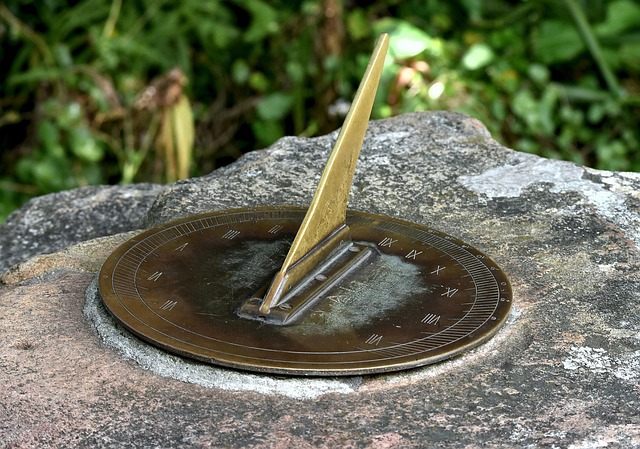
According to historical records documented on en.wikipedia.org, 12-hour timekeeping systems date back to ancient Egypt and Mesopotamia. Ancient sundials measured daylight by tracking the shadow cast by a gnomon, dividing daytime into 12 equal hours, while water clocks tracked night hours. Because the position of the sun dictated daily activity, dividing the day around the solar peak created a practical reference for early civilisations.
In modern 12-hour timekeeping, the calendar day splits into two distinct cycles:
- The AM cycle: Starts at 12:00 AM (midnight) and continues through 11:59 AM, covering late night, morning, and the moment just before noon.
- The PM cycle: Starts at 12:00 PM (noon) and continues through 11:59 PM, covering the afternoon, evening, and late night up to midnight.
Because each cycle repeats the exact same numbers, omitting the correct suffix changes the intended time by 12 hours. Setting an alarm for 7:00 AM wakes you in the morning, whereas 7:00 PM occurs seven hours after noon.
Why is 12 o’clock confusing with AM and PM?
The principal flaw in the 12-hour system occurs at exact noon and exact midnight. Strictly speaking, at 12:00 noon, the sun sits directly on the local meridian. Therefore, that specific instant is neither ante meridiem (before midday) nor post meridiem (after midday)—it is midday itself.
Similarly, 12:00 midnight occurs 12 hours after one noon and 12 hours before the next. Assigning midnight to ante or post depends entirely on whether it belongs to the day ending or the day beginning.
To eliminate ambiguity in daily conversation, common convention assigns:
- 12:00 PM to Noon: Because every second immediately following noon (such as 12:00:01) is after midday, convention assigns 12:00 PM to solar noon.
- 12:00 AM to Midnight: Because every second immediately following midnight (such as 12:00:01) is before the upcoming midday, convention assigns 12:00 AM to the start of a new calendar day.
Despite these conventions, technical standards organisations and government bodies recognize that “12 AM” and “12 PM” cause frequent errors in legal documents, travel bookings, and commercial contracts. Guidelines published on www.nist.gov by the National Institute of Standards and Technology recommend avoiding “12:00 AM” and “12:00 PM” entirely in formal writing. NIST suggests specifying “12:00 noon” and “12:00 midnight” or using 24-hour time to guarantee clarity.
How to convert between 12-hour and 24-hour time
Converting between 12-hour AM/PM notation and the 24-hour clock (frequently called military time in North America) relies on four rules. The 24-hour clock counts continuously from 00:00 (midnight) to 23:59, eliminating the need for morning or evening designators.
Converting 12-hour time to 24-hour time
- 12:00 AM (Midnight): Convert 12:00 AM to 00:00. For minutes past midnight, keep the minutes identical (for example, 12:20 AM becomes 00:20).
- 1:00 AM to 11:59 AM: Keep the hour and minute digits identical, dropping the AM suffix. Add a leading zero to single-digit hours (for example, 8:15 AM becomes 08:15).
- 12:00 PM (Noon): Convert 12:00 PM to 12:00. Minutes past noon stay unchanged (12:30 PM becomes 12:30).
- 1:00 PM to 11:59 PM: Add 12 to the hour value and drop the PM suffix (for example, 5:45 PM becomes 17:45 because 5 + 12 = 17).
Converting 24-hour time to 12-hour time
- 00:00 to 00:59: Replace 00 with 12 and add AM (for example, 00:35 becomes 12:35 AM).
- 01:00 to 11:59: Keep the hour value, remove any leading zero, and add AM (for example, 09:40 becomes 9:40 AM).
- 12:00 to 12:59: Keep the hour value and add PM (for example, 12:15 becomes 12:15 PM).
- 13:00 to 23:59: Subtract 12 from the hour value and add PM (for example, 22:10 becomes 10:10 PM because 22 – 12 = 10).
This table compares standard times across 12-hour, 24-hour, and unambiguous descriptive formats:
| 12-Hour Time | 24-Hour Time | Descriptive Standard Term | Position in the Day |
|---|---|---|---|
| 12:00 AM | 00:00 | 12 Midnight | Start of new calendar day |
| 12:30 AM | 00:30 | 12:30 in the morning | Early morning |
| 6:00 AM | 06:00 | 6:00 in the morning | Morning |
| 11:59 AM | 11:59 | 11:59 in the morning | Late morning / Pre-noon |
| 12:00 PM | 12:00 | 12 Noon | Midday solar peak |
| 12:30 PM | 12:30 | 12:30 in the afternoon | Early afternoon |
| 4:15 PM | 16:15 | 4:15 in the afternoon | Late afternoon |
| 9:00 PM | 21:00 | 9:00 in the evening | Night |
| 11:59 PM | 23:59 | 11:59 at night | Final minute of calendar day |
For additional details on regional time representations, review UTC+5, GMT+8, +05:30 — Time Zone Offset Notation Explained.
Which countries use AM and PM versus the 24-hour clock?
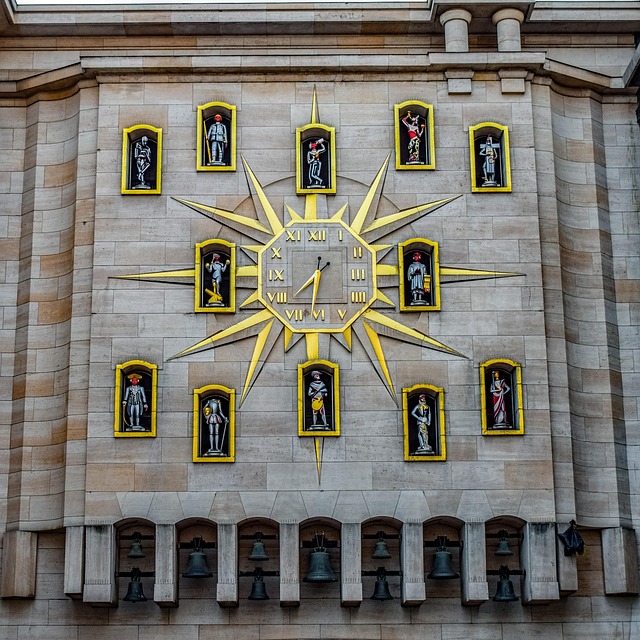
The usage of AM and PM varies by region, industry, and language. While English-speaking regions rely on the 12-hour clock in conversation, most global regions use 24-hour notation for official schedules.
Primary 12-hour clock countries
The 12-hour clock with AM and PM suffixes serves as the primary standard for everyday spoken and written time in only a few nations:
- United States and its territories
- Canada (predominantly in English-speaking provinces; Quebec uses 24-hour time)
- Australia and New Zealand
- Philippines
- United Kingdom (in informal speech, although public transit uses 24-hour schedules)
Primary 24-hour clock usage
In contrast, Continental Europe, Latin America, Asia, and Africa default to the 24-hour clock for business, public transportation timetables, and official announcements. A train schedule in Germany or Japan lists departures as 09:15 or 18:40 rather than 9:15 AM or 6:40 PM.
Critical international sectors rely on the 24-hour clock to eliminate operational mistakes:
- Aviation and Shipping: Flight rosters, maritime logs, and air traffic clearances use 24-hour time synchronized to UTC to protect safety.
- Healthcare: Patient records, surgery schedules, and medication logs use 24-hour notation to prevent giving evening medication in the morning.
- Logistics and Telecommunications: International shipping lines and data networks rely on 24-hour timestamps to coordinate server events across borders.
When organizing meetings across international boundaries, double-check your conversions with a time zone converter or consult our reference guide on GMT vs UTC.
How style guides format AM and PM
Grammar and publishing style manuals recommend specific rules for formatting AM and PM in professional documents.
- Associated Press (AP Style): Mandates lowercase letters with periods and a space after the number (
a.m.andp.m.). Example: “The session begins at 9 a.m. and closes at 4 p.m.” - The Chicago Manual of Style (CMOS): Accepts lowercase with periods (
a.m./p.m.) or small capital letters without periods (A.M./P.M.), separated from the number by a space. - Legal Writing Guides: Recommend small caps or explicit wordings like “11:59 p.m.” to prevent ambiguity in court filings and contracts.
- Digital Interfaces: Software displays typically use uppercase letters without periods (
AM/PM) due to screen space constraints.
Redundancies to avoid in written time
When using AM or PM, avoid combining the abbreviation with descriptive morning or evening phrases:
- Incorrect: “The workshop begins at 9:00 a.m. in the morning.”
- Correct: “The workshop begins at 9:00 a.m.” or “The workshop begins at 9:00 in the morning.”
- Incorrect: “The lunch break starts at 12 noon PM.”
- Correct: “The lunch break starts at 12 noon” or “The lunch break starts at 12:00 PM.”
How digital systems and software handle AM and PM
Computers, smartphones, and servers do not store time internally using AM and PM cycles. Digital systems process time as a continuous running number.
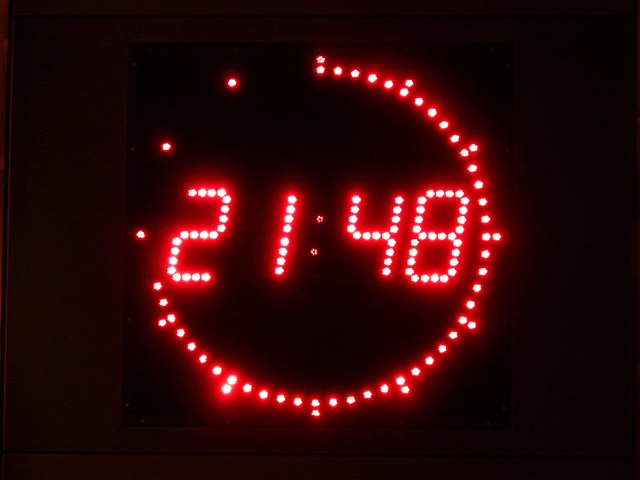
In Unix-based operating systems, mobile devices, and cloud databases, time is recorded using Unix epoch time—the total count of seconds elapsed since 00:00:00 UTC on January 1, 1970. Operating system display engines convert this raw numeric timestamp into human-readable text based on regional user settings.
When software formats a date string:
- Format patterns containing
hh:mm ttoutput a 12-hour value (01–12) with an AM or PM label. - Format patterns containing
HH:mmoutput a 24-hour value (00–23) without an AM or PM label.
Because devices store timestamps continuously in UTC, toggling your device settings between 12-hour and 24-hour display modes changes how numbers appear on screen without altering calendar database entries or saved alarms.
How to prevent scheduling mistakes with AM and PM
Misinterpreting AM and PM suffixes causes missed flights, missed project deadlines, and contract disputes. Adopting precise scheduling habits protects your timeline.
Avoiding midnight ambiguity in legal contracts
Because “12:00 AM on October 15” can mean the start of October 15 or the end of October 15, attorneys and project managers avoid using 12:00 AM for legal deadlines.
Professional drafters specify precise boundaries instead:
- 11:59 PM: Marks the final minute of a specified date.
- 12:01 AM: Marks the opening minute of a specified date.
Setting a contract expiration to “11:59 PM on December 31” leaves zero legal doubt regarding coverage throughout that final day. When managing multi-day project commitments, evaluate how contractual cutoff times interact with business days vs calendar days.
Flight and travel ticket conventions
Transit operators schedule midnight travel carefully. A flight scheduled for 12:10 AM on Saturday morning leaves ten minutes after midnight on Friday night. Passengers who arrive at the terminal on Saturday evening miss their flight by nearly 24 hours.
When reviewing itineraries:
- Confirm whether the schedule uses 12-hour or 24-hour notation.
- If a flight shows a 12:00 AM or 00:05 departure time, arrive at the terminal on the evening before the date listed on the ticket.
- Cross-check local departure times against target arrival zones using standard offset notations.
Frequently asked questions
What do the abbreviations AM and PM stand for?
AM stands for ante meridiem, which is Latin for “before midday.” PM stands for post meridiem, which translates to “after midday.”
Is 12 PM considered noon or midnight?
12 PM represents 12:00 noon, which marks the exact middle of the day when the sun reaches its highest point. 12 AM represents 12:00 midnight, marking the beginning of a new calendar day.
Why do some countries avoid using AM and PM?
Many countries use the 24-hour clock to eliminate potential confusion between morning and evening hours. This prevents scheduling errors in transportation, medical services, international commerce, and emergency logistics.
What is the best way to write 12 o’clock to avoid confusion?
To avoid confusion, write “12 noon” or “12 midnight” instead of using 12 PM or 12 AM. Alternatively, using 24-hour time (12:00 for noon and 00:00 for midnight) removes all ambiguity.

About Yasir Hafeez
Yasir Hafeez is the creator of itsdately a free, independent site for clear world time, calendars, and date tools.