
- Today
- Saturday, 31 October 2026 · ISO week 44 · day 304 of the year
Computed on every visit from the time-zone database and standard astronomical formulas, so these never go stale. The article below is unchanged.
A fortnight is a unit of time equal to exactly 14 consecutive days, or two full weeks, standard in British, Australian, and Commonwealth English for scheduling paychecks, holidays, and regular events. Unlike informal expressions that can be vague, a fortnight represents a fixed, mathematically precise duration equal to 336 hours.
Derived from Old English for “fourteen nights,” the word stems from early Germanic and Celtic traditions that measured time by tracking lunar phases after sunset rather than relying on solar days.
The following sections cover the word’s historical origins, dialect differences between British and American English, its practical use in payroll systems and work rosters, comparisons to terms like biweekly and sennight, and steps for calculating 14-day calendar cycles accurately.
What does fortnight mean?
A fortnight is a unit of time equal to exactly 14 consecutive days, or two full weeks. Derived from Old English history, this word remains standard everyday vocabulary in British, Australian, and Commonwealth English for scheduling paychecks, holidays, and regular events, though American English typically uses two weeks.
In standard time measurement, a fortnight translates directly into 336 hours, 20,160 minutes, or 1,209,600 seconds. While informal expressions like “a couple of weeks” can be vague and sometimes imply anywhere from 10 to 15 days, a fortnight is fixed. If you have ever asked, “What is a fortnight?”, the answer is always mathematically precise: 14 full days from start to finish.
This 14-day duration closely mirrors lunar observations that ancient societies relied on before modern solar calendars took hold. A full synodic lunar month—the time it takes for the moon to pass through all its phases—lasts roughly 29.53 days. A fortnight represents almost exactly half of that celestial cycle, providing a natural mid-point marker for early agricultural schedules, markets, and social gatherings.
Where does the word fortnight come from?
The noun stems directly from Old English fēowertīene niht, which literally translates to “fourteen nights.” Early Germanic and Celtic peoples, including the Anglo-Saxons and Norse, measured time by tracking nights rather than solar days. This was largely because their calendar systems relied on the visible phases of the moon, which were observed after sunset.
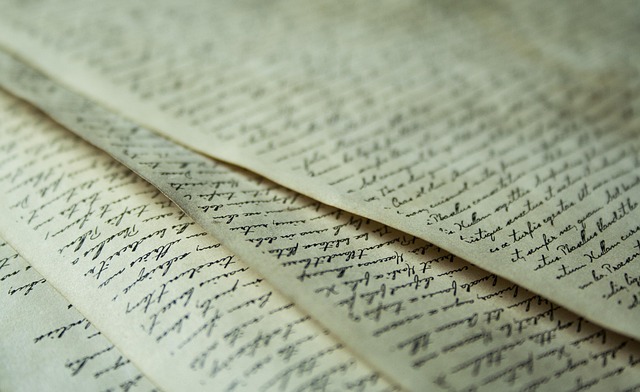
This night-centric view of time extended into daily customs. Days were frequently calculated as beginning at dusk, a cultural remnant that survives in modern terms such as “Christmas Eve” or “Halloween” (All Hallows’ Eve), where celebrations begin on the night preceding the festival day.
As documented in the English Wikipedia entry on Fortnight, this night-counting tradition was consistent across early northern European languages. The English language once possessed a companion word: sennight (derived from Old English seofon niht, meaning “seven nights” or one week). While sennight fell into disuse during the 19th century and became obsolete, fortnight remained active due to its practical convenience in legal, commercial, and workplace scheduling.
Why do British and American English treat fortnight differently?
The word highlights one of the clearest vocabulary splits between modern English dialects. In the United Kingdom, Ireland, Australia, New Zealand, South Africa, and India, “fortnight” is an everyday word used by all age groups across formal and informal settings.
In these regions, people routinely use phrases such as:
- “We are taking a fortnight’s holiday in July.”
- “Wages are processed on a fortnightly schedule.”
- “The local market meets every fortnight on Saturday.”
- “The team holds a fortnightly progress review.”
In contrast, American English replaced “fortnight” with “two weeks” during the 18th and 19th centuries. For most speakers in the United States, “fortnight” sounds archaic, literary, or formal. An American reader typically encounters the word in classic literature by authors like Jane Austen and Charles Dickens, or in historical media set in Great Britain.
Modern gaming culture introduced a separate source of confusion with the release of the multiplayer video game Fortnite in 2017. Because the game title is a homophone, younger generations in North America sometimes associate the spoken word with the software title rather than the 14-day calendar interval.
How is a fortnight used in payroll and work schedules?
Employment systems across Commonwealth countries heavily rely on 14-day cycles to manage payroll, roster shifts, and benefit distributions. A fortnightly pay schedule means employees receive their wages every two weeks, always on the same day of the week (such as every second Friday).
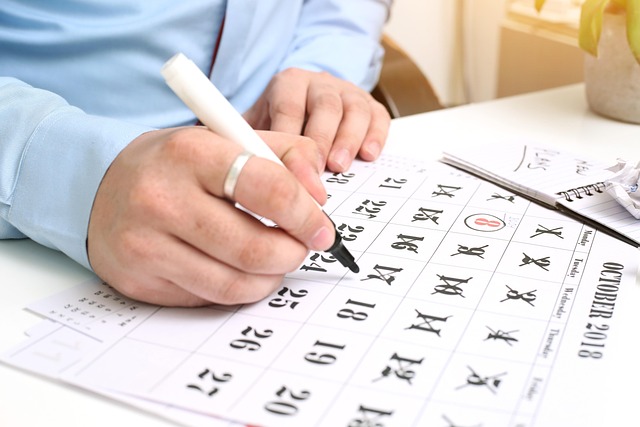
A fortnightly payroll system differs significantly from a semi-monthly payroll system, even though both involve paying workers twice per month on average:
- Fortnightly payroll: Wages are paid every 14 days, producing exactly 26 pay periods in a standard 365-day year ($26 times 14 = 364$ days).
- Semi-monthly payroll: Wages are paid twice per calendar month (typically on the 1st and 15th, or 15th and last day), producing 24 pay periods per year.
Because there are 52 weeks in a year, a fortnightly pay structure results in two months every calendar year containing three paydays instead of two. Employees on a bi-weekly or fortnightly schedule often rely on these “three-paycheck months” to boost savings or settle recurring bills.
Beyond financial offices, industrial sectors such as offshore energy, aviation, healthcare, and emergency services build operational shifts around 14-day rotations. Workers complete 14 consecutive days on duty followed by 14 days off duty. Government bodies and international organizations requiring precise time units often choose 14-day operational blocks because a fortnight maintains an identical day-of-the-week pattern from beginning to end.
Fortnight vs biweekly, sennight, and two weeks
Choosing the right time term depends on your audience and the level of clarity required. English features several words that describe multi-day periods, but they carry distinct risks of misunderstanding.
The term “biweekly” creates frequent confusion in professional communication. In standard dictionary definitions, “biweekly” can mean either “occurring every two weeks” or “occurring twice a week.” Similarly, “bimonthly” can mean “twice a month” or “every two months.” Using “fortnightly” eliminates this ambiguity completely, as it refers solely to a 14-day gap.
Other languages handle this time interval using slightly different counting mechanics. In French, two weeks is referred to as une quinzaine (15 days), and in Spanish, it is una quincena (15 days). This distinction occurs because traditional Romance language systems used inclusive counting—counting the day the period starts as Day 1, adding 14 full days, and counting the final day as Day 15. The Germanic heritage of English uses exclusive counting, measuring the exact 14 elapsed days or nights between the start and end point.
| Term | Exact Duration | Primary Dialects | Ambiguity Level | Typical Usage Context |
|---|---|---|---|---|
| Fortnight | 14 days (336 hours) | UK, Australia, NZ, India | None | |
| Two Weeks | 14 days (336 hours) | US, Canada, Global | Low | |
| Biweekly | 14 days OR twice a week | US, Corporate English | High | |
| Sennight | 7 days (168 hours) | Historical English | None | |
| Quincena / Quinzaine | 15 counted days | Spanish, French | Low |
How to calculate fortnightly dates and pay periods
Determining dates across a 14-day rhythm is simple because a fortnight always spans two complete weekly cycles. That means any fortnightly period ends on the same day of the week it started.

- Select your anchor date: Pick the starting day of your cycle on the calendar (for example, Friday, October 16, 2026).
- Add 14 calendar days: Count forward exactly 14 days to find your next recurring date. Adding 14 days to a Friday lands directly on Friday, October 30, 2026.
- Account for year-end remainder days: A standard calendar year has 365 days, which equals 26 fortnights plus 1 extra day. A leap year has 366 days, which equals 26 fortnights plus 2 extra days. Because of these leftover days, recurring fortnightly events drift forward on the calendar by one or two days each year relative to fixed dates.
- Identify three-paycheck months: If your initial payday falls within the first three days of January, your 13th payday will occur in mid-year and your 26th payday will occur in late December, giving those two months three paychecks each.
- Automate complex tracking: For long-term project schedules spanning multiple years or short months like February, using an online date calculator helps prevent manual counting errors across variable month lengths.
Common misunderstandings about the 14-day period
Despite its straightforward mathematical definition, several common mistakes occur when using or calculating fortnights in modern contexts.
Mistake 1: Treating a fortnight as half a month. A calendar month averages 30.437 days ($365 / 12$). Half of an average calendar month is roughly 15.2 days, not 14 days. Calculating monthly rent or interest rates by halving monthly figures instead of using true 14-day counts leads to financial discrepancies over time.
Mistake 2: Assuming a fortnight changes length based on February. A fortnight is strictly 14 days regardless of month lengths or leap years. February consists of exactly two fortnights in standard years (28 days) and two fortnights plus one day in leap years (29 days).
Mistake 3: Confusing fortnightly pay with twice-monthly pay. Employees paid semi-monthly receive 24 paychecks per year, while employees paid fortnightly receive 26 paychecks per year. The individual pay amounts under a fortnightly plan are smaller, but the extra two paychecks equalize total annual earnings.
Frequently asked questions
Is a fortnight exactly 14 days?
Yes, a fortnight is strictly equal to 14 consecutive calendar days, or 336 hours. Its definition does not change based on region, season, or calendar month.
Why is it called a fortnight instead of two weeks?
The term comes from Old English fēowertīene niht, which means “fourteen nights.” Ancient Germanic and Celtic cultures tracked time by counting nights based on lunar observation rather than solar days.
Do Americans use the word fortnight?
Speakers in the United States rarely use “fortnight” in casual speech, preferring “two weeks.” However, the word is universally recognized through literature, historical films, and British media imports.
What is the difference between biweekly and fortnightly?
Fortnightly strictly means once every 14 days. Biweekly is ambiguous because it can mean either once every two weeks or twice per week.
How many fortnights are in a calendar year?
A standard 365-day year contains 26 full fortnights plus 1 extra day. A 366-day leap year contains 26 full fortnights plus 2 extra days.

About Yasir Hafeez
Yasir Hafeez is the creator of itsdately a free, independent site for clear world time, calendars, and date tools.