
- Today
- Saturday, 31 October 2026 · ISO week 44 · day 304 of the year
Computed on every visit from the time-zone database and standard astronomical formulas, so these never go stale. The article below is unchanged.
The Islamic calendar shifts 11 days earlier each Gregorian year because it is a purely lunar calendar consisting of 12 astronomical lunar months totaling 354 or 355 days. Because the solar Gregorian calendar spans 365 or 366 days, the 10- to 12-day shortfall causes Islamic dates to move backward through the solar seasons annually.
This annual adjustment is not an error or oversight. It is a fundamental feature of a timekeeping system based strictly on the observable phases of the moon rather than the Earth’s position relative to the sun.
The math behind the annual 11-day shift
To understand why the shift occurs, you have to compare how lunar and solar cycles measure time. The Gregorian calendar follows the Earth’s orbit around the sun—a solar cycle lasting approximately 365.2422 solar days. To keep civil time aligned with natural solar seasons like equinoxes and solstices, the Gregorian calendar uses 365 days in standard years and adds a leap day every four years.
The Islamic calendar, also known as the Hijri calendar, follows the cycles of the moon. A lunar month—the time between one new moon crescent and the next, known as a synodic month—lasts about 29.53059 days (29 days, 12 hours, 44 minutes, and 2.8 seconds). Because a practical calendar requires whole days, Hijri months alternate between 29 and 30 days.
When you multiply 12 lunar months by an average month length of 29.53059 days, a standard Hijri year totals approximately 354.367 days. Comparing the two systems reveals the exact gap:
- Standard solar year: 365 days
- Standard lunar year: 354 days
- Standard difference: 11 days shorter
In a normal solar year compared to a normal lunar year, the difference is exactly 11 days (365 minus 354). When a Gregorian leap year occurs (366 days), the difference expands to 12 days. Conversely, when the Hijri calendar undergoes a lunar leap year (355 days) against a normal solar year (365 days), the difference narrows to 10 days. On average, the lunar year trails the solar year by roughly 10.88 days, which rounds to 11 days annually.
Because the lunar calendar is 11 days shorter, every Islamic month—including Ramadan, Shawwal, and Dhu al-Hijjah—begins 11 days earlier on the Gregorian calendar than it did the previous solar year.
The 33-year cycle: How holidays rotate through all four seasons
Because Islamic dates move backward by roughly 11 days each solar year, holidays do not stay anchored to any single season. Over a span of roughly 32.5 to 33 solar years (which equals 34 lunar years), Islamic observances complete a full rotation through spring, summer, autumn, and winter.
For example, consider the annual shift of Ramadan:
- In 2026, Ramadan began in mid-February (late winter in the Northern Hemisphere).
- In 2027, Ramadan is projected to commence around early February.
- In 2028, Ramadan will move into late January.
- By 2034, Ramadan will fall during peak summer in July and August.
This steady rotation means that over a person’s adult life, they experience sacred observances under entirely different environmental conditions. Someone living in northern latitudes will fast during short, cold winter days in one decade, and during long, warm summer days sixteen years later.
Why the Islamic calendar does not use intercalary leap months
Many ancient lunar calendars faced the same 11-day seasonal drifting problem. Cultures such as the ancient Babylonians, Hebrews, and pre-Islamic Arabs addressed this by adding an extra month (an intercalary month, historically called nasi’) every two or three years. This created a lunisolar calendar, keeping lunar months bound to agricultural harvest seasons.
In 631 CE (10 AH), the practice of intercalation was explicitly prohibited in Islamic tradition. Surah At-Tawbah (9:36–37) established that the year consists strictly of twelve lunar months, forbidding the insertion of extra months to realign with solar seasons.
This ruling permanently separated religious observances from solar agriculture and economic cycles. The deliberate absence of intercalary months serves several primary functions:
- Universal fairness: No geographical region holds a permanent advantage in fasting duration or weather conditions. Every region experiences both short winter fasts and long summer fasts over the 33-year cycle.
- Independence from agricultural cycles: Religious observances remain focused on spiritual practice rather than specific seasonal harvests or weather patterns.
- Observational simplicity: Timekeeping relies directly on visible sky phenomena rather than political or civil decrees regarding when to insert leap months.
How the 12 Hijri months are structured
The Islamic calendar consists of twelve months that run for either 29 or 30 days. The sequence remains unchanged year after year:
- Muharram (30 days) – Sacred month; marks the start of the Hijri year.
- Safar (29 days)
- Rabi’ al-Awwal (30 days)
- Rabi’ al-Thani (29 days)
- Jumada al-Ula (30 days)
- Jumada al-Akhirah (29 days)
- Rajab (30 days) – Sacred month.
- Sha’ban (29 days)
- Ramadan (30 days) – Month of obligatory fasting.
- Shawwal (29 days) – Commences with Eid al-Fitr.
- Dhu al-Qa’dah (30 days) – Sacred month.
- Dhu al-Hijjah (29 or 30 days) – Sacred month of the Hajj pilgrimage; includes Eid al-Adha.
Lunar leap years in the tabular Hijri calendar
While the Islamic calendar does not add leap months, it does add a single leap day to certain years to keep calculated calendars aligned with the astronomical mean motion of the moon. In the tabular Islamic calendar system, a 30-year cycle contains 19 regular years of 354 days and 11 leap years of 355 days.
In a leap year, the extra day is added to the 12th month, Dhu al-Hijjah, extending it from 29 days to 30 days. This fractional correction keeps the calculated lunar calendar aligned with actual astronomical new moons over long periods.
Why official Islamic dates change depending on moon sighting
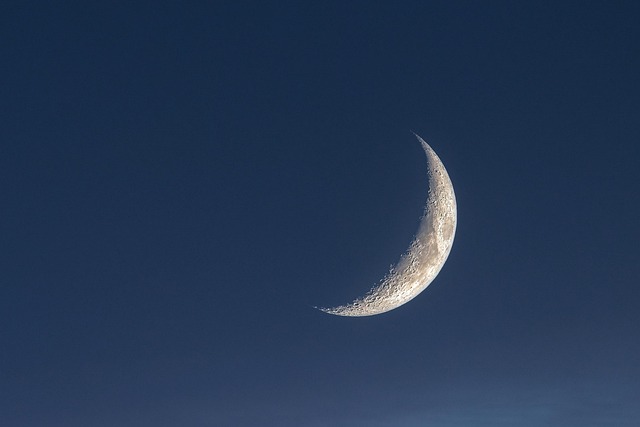
While astronomical calculations can project lunar phases centuries in advance, the official start of an Islamic month traditionally depends on observing the new crescent moon (hilal). This reliance on observation introduces regional differences in when months begin.
Visual sighting vs astronomical calculation
Three main methods are used around the world to confirm the beginning of a Hijri month:
1. Traditional physical sighting (Ru’yat al-Hilal): Religious authorities observe the horizon after sunset on the 29th day of the current month. If a thin crescent moon is visible to the naked eye or through telescopes, the new month starts the next morning. If cloud cover or atmospheric conditions block visibility, the current month completes 30 days, and the new month starts a day later.
2. Calculated astronomical criteria (Hisab): Bodies such as Turkey’s Presidency of Religious Affairs and the European Council for Fatwa and Research use astronomical models. If conjunction occurs before sunset and the moon sets after the sun, the new month is declared on the calculated date regardless of physical weather interference.
3. Hybrid government criteria: Some nations combine approaches. For example, Saudi Arabia uses the official Umm al-Qura calendar (a calculated system based on moonset following sunset in Mecca) for government operations, but relies on Judicial High Court sighting reports for religious holidays like Ramadan and Eid.
Because atmospheric clarity, latitude, and regional sighting rules vary, neighboring countries occasionally declare the start of a month one day apart.
Comparing solar and lunar calendar systems
Comparing the structural mechanics of both calendar systems clarifies how they handle year length, seasonal alignment, and date tracking:
| Feature | Gregorian Calendar | Hijri (Islamic) Calendar |
|---|---|---|
| Astronomical Basis | Solar cycle (Earth orbiting the Sun) | Lunar cycle (Moon phases orbiting Earth) |
| Year Length | 365 days (366 in solar leap years) | 354 days (355 in lunar leap years) |
| Month Length | 28, 29, 30, or 31 days (fixed civil months) | 29 or 30 days (based on crescent sighting or calculation) |
| Leap Year System | Adds 1 day to February every 4 years | Adds 1 day to Dhu al-Hijjah 11 times in a 30-year cycle |
| Seasonal Position | Fixed to solar seasons | Shifts earlier by ~11 days each solar year |
| Starting Epoch | Calculated from the birth of Jesus (CE) | Dated from the Hijra migration in 622 CE (AH) |
| Primary Function | Civil, business, and international scheduling | Religious fasts, pilgrimages, and Islamic holidays |
How the 11-day shift affects everyday life, work, and finances
The backward shift of the Islamic calendar creates distinct practical considerations across daily life, commercial operations, and financial management.
Fasting duration and physical endurance
Because Ramadan shifts by 11 days each year, fasting hours change over time. Fasting requires abstaining from food and drink from dawn until sunset.
When Ramadan falls in summer in northern latitudes, daily fasts can extend to 16 to 18 hours in warmer conditions. When Ramadan shifts into winter sixteen years later, daily fasts in those same regions shorten to 8 to 10 hours during cooler weather.
Work hours and business scheduling
In Muslim-majority nations, government offices, schools, and businesses often shorten public workday hours during Ramadan to accommodate altered sleeping and dining schedules. Retail activity frequently shifts to post-sunset hours.
For international organizations doing business across international boundaries, accounting for these changing dates is essential for workflow planning. Project milestones and delivery schedules move forward by 11 days every year. For guidance on calculating business days against moving calendar holidays, see How Many Days Until December 1st? Your End-of-Year Planning Guide.
Pilgrimage planning and heat safety
The annual Hajj pilgrimage takes place during Dhu al-Hijjah, the 12th month of the Hijri calendar. Millions of pilgrims perform outdoor rituals in Mecca and surrounding sites. When Dhu al-Hijjah falls during peak summer months, daytime temperatures frequently exceed 45°C (113°F), requiring extensive heat management infrastructure. Decades later, when Hajj rotates into winter, daytime conditions are mild.
Financial planning and Zakat calculations
Zakat—the mandatory annual charitable duty—is calculated on wealth held over one full lunar year.
Understanding Hijri year numbering (AH)
Years in the Islamic calendar are designated as AH, which stands for Anno Hegirae (“in the year of the Hijra”). The starting point of the calendar is the Hijra—the historic migration of Prophet Muhammad and his followers from Mecca to Medina in 622 CE.
The second Caliph, Umar ibn al-Khattab, established the calendar system in 638 CE (17 AH), designating the first day of Muharram in 622 CE as the official start of Year 1 AH.
Because lunar years are shorter than solar years, converting between Hijri and Gregorian years requires accounting for the length difference. A standard formula for approximating the conversion is:
Hijri Year (AH) ≈ (32 / 33) × (Gregorian Year − 622)
For example, the Gregorian year 2026 corresponds to the Hijri span of 1447 AH to 1448 AH. Over long periods, the Hijri year count gains on the Gregorian count at a rate of one year every 33 solar years.
How to track and plan around Hijri calendar shifts
Managing schedules around an 11-day annual shift requires proactive planning, particularly for international organizations, travel, and public event planning.
1. Use projected calendar tools for advance planning
For long-term scheduling, rely on software that projects lunar dates using astronomical criteria. While official religious announcements depend on visual sightings, projection models are generally accurate within a 24- to 48-hour window years ahead. Selecting the best digital calendar tools lets you display Hijri dates alongside solar schedules.
2. Build flexible buffers into international deadlines
When scheduling international conferences, cross-border product launches, or commercial transport near major Islamic holidays, avoid placing strict deadlines on the exact projected date. Because visual moon sightings can move official start dates by a day, establishing a 72-hour operational buffer prevents scheduling conflicts.
3. Coordinate cross-border time zones and daylight changes
When planning international business operations during shifting holiday periods, keep in mind that seasonal clock adjustments also vary globally. Reviewing Why US and Europe Change Clocks on Different Dates helps ensure meeting times align across changing seasonal daylight savings schedules.
Frequently asked questions
Why is the shift 11 days instead of exactly 10 or 12 days?
The baseline mathematical difference between a 365-day Gregorian year and a 354-day Hijri year is 11 days. In solar leap years (366 days), the gap widens to 12 days, while in lunar leap years (355 days), it narrows to 10 days. The long-term mathematical average difference is roughly 10.88 days, which rounds to 11 days.
How long does it take for an Islamic date to complete a full seasonal rotation?
It takes approximately 32.5 to 33 solar years (or 34 lunar years) for an Islamic date to cycle through all four solar seasons and return to its original Gregorian date. During this cycle, dates advance backward by about one solar month every three years.
Are there leap years in the Islamic calendar?
Yes, the Islamic calendar includes lunar leap years to keep calculated months aligned with astronomical moon cycles. Within a 30-year cycle, 11 years add one day to the final month of Dhu al-Hijjah, increasing the year from 354 to 355 days.
Why do different countries sometimes celebrate Eid on different days?
Different countries may declare Eid on different days because some rely on local visual crescent sightings, others follow global sighting reports, and some use astronomical calculation. Local cloud cover, geographic latitude, and differing religious council rules can cause dates to vary by 24 hours.
Is the Hijri calendar used for official government business?
While most countries use the Gregorian calendar for general civil administration and global commerce, several nations in the Middle East maintain the Hijri calendar for public sector scheduling, holiday declarations, and legal observances alongside solar calendars.

About Yasir Hafeez
Yasir Hafeez is the creator of itsdately a free, independent site for clear world time, calendars, and date tools.