
- Greenwich today
- sunrise 06:52, solar noon 11:44, sunset 16:37
- Today
- Saturday, 31 October 2026 · ISO week 44 · day 304 of the year
Computed on every visit from the time-zone database and standard astronomical formulas, so these never go stale. The article below is unchanged.
Philadelphia sunset times range from as early as 4:35 PM EST in early December to as late as 8:34 PM EDT in late June. To catch the best light, plan your arrival 45 minutes before official sunset for golden hour and stay 20 minutes after for civil twilight colors.
Because high-rise skyscrapers in Center City create an urban canyon effect, street-level sunlight often vanishes 15 to 30 minutes before the official astronomical sunset time.
This guide explains how seasonal shifts alter daylight hours, how to calculate golden hour and navigate twilight phases, and where to find the best viewing locations across the city.
Philadelphia Sunset Times, Golden Hour, and Best Viewing Locations
In Philadelphia, sunset times range from as early as 4:35 PM EST in early December to as late as 8:34 PM EDT in late June. To catch the best light, plan your arrival 45 minutes before official sunset for golden hour and stay 20 minutes after for civil twilight colors.
Planning outdoor activities in the City of Brotherly Love requires knowing both the clock time of sunset and how Philadelphia’s unique geography, seasonal shifts, and skyline affect actual visibility. Whether you are photographing urban architecture, arranging a riverside date, or timing an evening run along the Schuylkill, understanding local lighting patterns ensures you do not miss the day’s best visual window.
How do Philadelphia sunset times change throughout the year?
Philadelphia sits at approximately 39.95° N latitude and 75.16° W longitude. Because of this northern latitude, the city experiences pronounced variations in daylight hours across four distinct seasons. Earth’s axial tilt of 23.5 degrees causes the sun’s arc across the Philadelphia sky to change continuously, altering both the exact moment of sunset and total daily daylight.
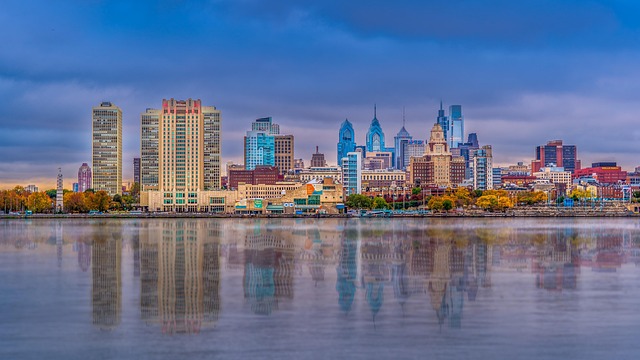
During the summer solstice in late June, Philadelphia enjoys its longest day of the year, with more than 15 hours of daylight and sunset arriving at roughly 8:34 PM EDT. Throughout July and August, sunset times slowly pull back, dropping to around 7:45 PM EDT by late August. As the autumnal equinox approaches in late September, daylight decreases rapidly—by almost 2.5 minutes per day—setting the sun near 7:00 PM EDT.
By the winter solstice in late December, total daylight shrinks to roughly 9 hours and 20 minutes, pushing official sunset to its earliest boundary around 4:35 PM EST. The spring equinox in late March brings daylight back into balance, with sunset occurring around 7:15 PM EDT following the seasonal clock change.
Daylight Saving Time (DST) shifts local schedules dramatically twice per year:
- Second Sunday in March: Clocks spring forward one hour, jumping official sunset from approximately 6:05 PM EST to 7:05 PM EDT overnight.
- First Sunday in November: Clocks fall back one hour, dropping sunset from approximately 6:00 PM EDT to 5:00 PM EST.
What is the urban canyon effect on Philadelphia sunsets?
Official astronomical sunset is defined as the exact moment when the sun’s upper limb disappears below the mathematical horizon at sea level. However, if you are standing in Center City Philadelphia, your effective sunset occurs significantly earlier due to the urban canyon effect created by high-rise architecture.
Philadelphia’s downtown skyline contains major skyscrapers that block the western horizon. Key structures that cast substantial western shadow lines include:
- Comcast Technology Center: 1,121 feet (342 meters)
- Comcast Center: 975 feet (297 meters)
- One Liberty Place: 945 feet (288 meters)
- Two Liberty Place: 848 feet (258 meters)
- BNY Mellon Center: 792 feet (241 meters)
At street level in neighborhoods like Rittenhouse Square, Midtown Village, or Washington Square West, these massive buildings create an artificial horizon. Sunlight often vanishes from street level 15 to 30 minutes before the official astronomical sunset time. If you are standing on Chestnut Street or Walnut Street, the street grid enters shadow while the top floors of high-rises and surrounding clouds remain brightly illuminated.
Additionally, Philadelphia’s street grid, designed by William Penn, is oriented roughly 9 degrees clockwise from true cardinal directions. Twice a year—around late October and mid-February—the setting sun aligns directly down east-west corridors such as Market Street, Chestnut Street, and JFK Boulevard. Known locally as “Phillyhenge,” this phenomenon offers striking photographic opportunities as sunlight beams straight through the city’s building corridors.
When is golden hour in Philadelphia and how do you calculate it?
Golden hour refers to the period shortly before sunset when the sun rests low on the horizon—specifically between 6 degrees above the horizon and 4 degrees below it. During this interval, sunlight must travel through a thicker layer of Earth’s atmosphere. The atmosphere scatters shorter blue wavelengths and allows longer red, orange, and golden wavelengths to dominate, creating a soft, warm light with minimal contrast and long, dramatic shadows.
In Philadelphia, golden hour timing varies by season due to the changing angle at which the sun approaches the horizon:
- Summer (June to August): The sun descends at a flatter, shallower angle relative to Philadelphia’s latitude. Golden hour starts roughly 50 to 60 minutes before official sunset and extends about 15 minutes past sunset.
- Winter (November to February): The sun sets at a steeper angle relative to the horizon. Golden hour compresses into a shorter window, starting roughly 35 to 45 minutes before official sunset.
- Spring and Autumn: Golden hour typically spans 45 to 50 minutes prior to official sunset.
To calculate golden hour accurately for any Philadelphia event, locate the official sunset time for your date and subtract 45 minutes for your start time. For photography or romantic evening outings, arriving at your chosen vantage point 45 to 60 minutes before sunset ensures you capture the transition from bright daylight to rich warmth. If you are planning an evening date around golden hour, see Why India’s Time Zone is Offset by 30 Minutes: A Deep Dive for atmospheric venue ideas nearby.
Immediately following golden hour comes the “blue hour,” which occurs during the middle of civil twilight when the sun is 4 to 8 degrees below the horizon. The sky takes on a deep, saturated cobalt hue that creates striking contrast against artificial city lights as office towers, bridges, and streetlamps illuminate.
What are the twilight phases following a Philadelphia sunset?
Sunset is not an instantaneous drop into darkness; it marks the transition into twilight, which consists of three mathematically defined atmospheric phases based on the sun’s solar elevation below the horizon.

Civil Twilight (0° to 6° below the horizon)
Civil twilight begins the moment the sun dips below the horizon and lasts approximately 28 to 34 minutes in Philadelphia. During this phase, terrestrial objects remain clearly visible without artificial illumination, and the sky displays warm ambient gradients of gold, pink, and deep violet. Civil twilight represents the primary window for catching post-sunset sky color, often called the afterglow.
Nautical Twilight (6° to 12° below the horizon)
Nautical twilight spans roughly 30 to 38 minutes after civil twilight concludes. During this phase, the horizon remains loosely distinguishable against the sky, but ground-level features darken significantly. Marine navigation historically relied on this period to take star sight lines against the horizon. Bright planets like Venus and bright stars like Vega or Sirius become clearly visible, and Philadelphia’s city skyline light display reaches full visual brightness.
Astronomical Twilight (12° to 18° below the horizon)
Astronomical twilight lasts roughly 32 to 42 minutes after nautical twilight. Atmospheric sky glow fades almost completely, allowing astronomers to observe faint celestial objects without solar light pollution. Once astronomical twilight ends, full night officially begins. In urban Philadelphia, artificial streetlighting obscures subtle astronomical details regardless of twilight phase, but outer parks like Wissahickon Valley Park experience noticeable darkening during this window.
Where are the best spots to watch the sunset in Philadelphia?
Selecting the right viewing location depends on whether you want an urban skyline view, an over-water perspective, or an elevated rooftop vantage point that clears Center City’s shadow obstacles.
Philadelphia Museum of Art Steps (Fairmount)
Perched elevated above Eakins Oval at the head of the Benjamin Franklin Parkway, the Museum Steps offer a sweeping view facing southeast down the Parkway toward City Hall, alongside direct western views across the Schuylkill River. Watching from the top portico allows you to see the setting sun reflect across the glass facades of Center City towers while the western sky glows behind Fairmount Park.
Cira Green (University City)
Located on the 11th floor rooftop of a parking structure at 129 S 30th Street, Cira Green is an elevated 1.2-acre public park. Because it sits high above street level west of the Schuylkill River, it eliminates street-level shadow obstructions. It provides unobstructed 360-degree views, making it ideal for watching the sun sink behind West Philadelphia while light reflects off the west-facing towers of Center City.
Schuylkill River Banks Boardwalk
Extending directly over the water between Locust Street and South Street, the Schuylkill Banks Boardwalk provides clear, unobstructed western sightlines over the river. The water reflects orange and purple sky tones, making it one of the most popular evening walking paths in the city for joggers, couples, and landscape photographers.
Belmont Plateau (Fairmount Park)
Situated in West Fairmount Park, Belmont Plateau provides one of Philadelphia’s classic panoramic vantage points. Facing southeast from an elevated grassy hill, you view the full Center City skyline framed against the open sky. During autumn and winter, the sun sets further south, casting warm side-lighting across the western edge of the downtown skyline.
Bok Bar (South Philadelphia)
Located on the 8th-floor roof of the historic Bok building at 800 Mifflin Street, Bok Bar offers sweeping northward and westward views over South Philadelphia’s neighborhood rowhouses straight toward the downtown skyline. The unhindered height provides an ideal vantage point for golden hour drinks and watching post-sunset twilight hues.
Penn’s Landing and Cherry Street Pier (Delaware River Waterfront)
While located on Philadelphia’s eastern border, the Delaware River waterfront offers excellent view angles for post-sunset civil twilight and blue hour. Looking east across the river, you capture the dramatic afterglow reflecting on the Ben Franklin Bridge and water, while the setting sun illuminates the eastern facades of Center City behind you.
| Location | Elevation / Setting | Primary View Direction | Best Time Relative to Sunset | Key Visual Feature |
|---|---|---|---|---|
| Philadelphia Museum of Art | Elevated Grand Staircase | 30 min before to 20 min after | Skyline silhouette and Parkway lighting | |
| Cira Green | 11th-Floor Green Roof | 360-degree Panorama | 45 min before to 30 min after | Elevated skyline reflection without street shadow |
| Schuylkill River Boardwalk | Over-water Pedestrian Path | West / Southwest | 15 min before to 20 min after | Water surface reflections and bridge frames |
| Belmont Plateau | High Park Hillside | Southeast skyline & West horizon | 40 min before to 15 min after | Full downtown skyline overview |
| Bok Bar | 8th-Floor Rooftop Bar | North & West | 60 min before to 30 min after | Panoramic rowhouse landscape to Center City |
| Cherry Street Pier | Covered River Pier | East (Delaware River) | 10 min to 35 min after sunset | Blue hour glow on Ben Franklin Bridge |
How do weather conditions affect Philadelphia sunset quality?
Not all clear days yield dramatic sunsets. Atmospheric conditions, air quality, and cloud formations over the Delaware Valley dictate whether a sunset appears dull or vibrant.
Cloud cover plays the single largest role in sunset intensity:
- High-altitude clouds (Cirrus and Cirrocumulus, 20,000+ ft): These thin, icy clouds capture light from the setting sun long after it has dipped below the local horizon, producing intense pink, red, and crimson sky color during civil twilight.
- Mid-altitude clouds (Altocumulus, 6,000–20,000 ft): Scattered mid-level cloud decks create dramatic contrast, catching orange rays on their undersides while leaving blue sky gaps.
- Low-altitude clouds (Stratus and Stratocumulus, below 6,000 ft): Thick, heavy low clouds block incoming sunbeams, dulling golden hour into a uniform gray dusk.
Humidity and air masses also modify visual clarity. High humidity during Philadelphia’s summer months introduces haze that scatters light heavily, softening distant skyline edges and creating muted yellow tones. Conversely, clean, low-humidity air masses trailing behind cold fronts in crisp autumn and winter months deliver maximum atmospheric clarity, yielding sharp horizon lines and intense red-violet gradients.
How to track precise Philadelphia sunset data online
Planning precise timing requires reliable astronomical data tools that factor in Philadelphia’s exact geographical coordinates. Websites like sunrise-sunset.org and Time and Date calculate real-time daily solar positions, civil twilight durations, and golden hour windows for Philadelphia, PA.
When reviewing timing data, check both official astronomical sunset and civil twilight end times. Photographers and outdoor planners should also track solar azimuth—the precise compass angle of the setting sun—which shifts from northwest (around 300°) in midsummer to southwest (around 240°) in midwinter.
Dedicated mobile applications such as Sun Surveyor or PhotoPills utilize augmented reality overlays on your smartphone camera, allowing you to project the exact path of the sun relative to Philadelphia buildings or park trees before heading out.
What common mistakes ruin a Philadelphia sunset plan?
Avoiding a few simple planning errors ensures your evening outing goes smoothly:
- Arriving exactly at sunset time: If you show up at the official sunset minute, you miss the warm light of golden hour entirely and risk finding street-level views already shrouded in skyscraper shadows.
- Leaving immediately after the sun dips: Many people head inside as soon as the sun disappears below the horizon, missing the maximum sky color that often develops 15 to 20 minutes later during civil twilight.
- Ignoring Center City traffic bottlenecks: Heavy evening commuter traffic along I-76 (Schuylkill Expressway), Kelly Drive, and Chestnut Street can easily add 20 to 30 minutes to travel times between 4:30 PM and 6:30 PM. Factor travel delays into your schedule so you do not spend golden hour stuck in traffic.
- Miscalculating winter shadow movement: In late fall and winter, building shadows stretch rapidly due to the sun’s lower trajectory. A location that receives warm sunlight at 3:45 PM may sit in deep cold shadow by 4:15 PM.
Frequently asked questions
What causes Philadelphia sunset times to change daily?
Philadelphia sunset times change daily because Earth orbits the sun on a 23.5-degree axial tilt. As Philadelphia shifts relative to incoming solar rays throughout the year, the sun’s trajectory across the sky changes angle and height, continuously expanding or contracting daily daylight length.
What is the golden hour and why is it important for photography?
Golden hour is the period shortly before sunset when the low sun scatters blue light rays through atmospheric depth, leaving warm red and yellow tones. It is ideal for photography and outdoor leisure because it produces soft illumination, warm skin tones, and long, flattering shadows.
How does Daylight Saving Time affect Philadelphia sunsets?
Daylight Saving Time shifts local clock time forward one hour in spring and back one hour in autumn. In March, sunset instantly jumps an hour later on the clock (e.g., from 6:05 PM EST to 7:05 PM EDT), while in November, sunset drops an hour earlier (e.g., from 6:00 PM EDT to 5:00 PM EST).
Where can I find accurate Philadelphia sunset times for a specific date?
You can check precise sunset, twilight, and golden hour times for any calendar date on astronomical planning tools like Time and Date (timeanddate.com) or Sunrise-Sunset.org (sunrise-sunset.org).
What is the difference between civil, nautical, and astronomical twilight?
Civil twilight (0° to 6° below horizon) offers enough ambient light to see clearly outside without artificial lamps. Nautical twilight (6° to 12° below horizon) brings darkening skies where horizon lines blur and bright stars emerge. Astronomical twilight (12° to 18° below horizon) is the final transition to complete dark night sky observation.

About Yasir Hafeez
Yasir Hafeez is the creator of itsdately a free, independent site for clear world time, calendars, and date tools.