- Today
- Sunday, 1 November 2026 · ISO week 44 · day 305 of the year
Computed on every visit from the time-zone database and standard astronomical formulas, so these never go stale. The article below is unchanged.
Clocks run clockwise because medieval European clockmakers designed mechanical dials to mimic the movement of a horizontal sundial’s shadow in the Northern Hemisphere. As the sun moves across the southern sky, a northern sundial shadow travels from west to north to east, establishing the familiar rotation used on modern clock faces.
This overview explains how solar shadows dictated clock mechanics, why twelve is placed at the top of the dial, and how Southern Hemisphere shadows differ. It also covers notable counterclockwise clocks, historical terms like sunwise and widdershins, and how clockwise direction influenced everyday engineering and culture.
Why Do Clocks Run Clockwise?
Clocks run clockwise because early mechanical clockmakers in the Northern Hemisphere designed them to mimic the movement of a sundial’s shadow. In northern latitudes, as the sun moves across the southern sky from east to west, a horizontal sundial’s shadow travels from west to north to east—the precise path we now call clockwise.
This standard was set centuries ago when mechanical clock movements began replacing shadow-based timekeeping. Because northern Europe was the birthplace of European mechanical horology during the fourteenth century, craftsmen built rotating pointers that followed the familiar direction people had observed on sundials for generations.
How sundials dictated the direction of clock hands
To understand why clock hands turn to the right, you have to look at how solar shadows move across the ground north of the equator. Because the Earth rotates from west to east, the sun appears to rise in the east, travel across the sky, and set in the west.

For observers located in the Northern Hemisphere (north of the Tropic of Cancer), the sun passes through the southern portion of the sky at midday. When you place a horizontal sundial on the ground with a vertical gnomon casting a shadow:
- At sunrise in the east, the sun casts a long shadow pointing west.
- By midday, when the sun reaches its highest point due south, the shadow points directly north.
- At sunset in the west, the shadow points east.
As the day progresses, the tip of the shadow traces a continuous arc from west to north to east. When European clockmakers in countries like England, France, Germany, and Italy constructed the first mechanical turret clocks for cathedral towers in the 1300s, they needed a visual method to display passing hours. Designing mechanical gears so the indicator hand swept from west to north to east meant the public could read the new mechanical dials without learning a new visual language.
What happens on sundials in the Southern Hemisphere?
If you set up a horizontal sundial south of the Tropic of Capricorn—in countries such as Australia, Argentina, or South Africa—the solar track behaves differently relative to the horizon. In the Southern Hemisphere, the sun rises in the east, travels through the northern portion of the sky at midday, and sets in the west.
Because the sun sits in the northern sky at noon, the shadow of a gnomon points due south at midday. Consequently, as the sun moves from east to west, the shadow travels from west to south to east. On a Southern Hemisphere sundial, the shadow sweeps in a counterclockwise circle.
Had mechanical horology been invented in Sydney or Buenos Aires rather than medieval Europe, standard clock hands would almost certainly turn counterclockwise. Clockwise rotation is not a law of physics or planetary mechanics; it is a geographic inheritance resulting from the latitude of early clockmakers.
Why 12 stands at the top of the clock face
The layout of numbers on a modern clock face comes directly from sundial alignment. Noon represents solar midpoint—the instant the sun reaches its maximum altitude above the horizon.
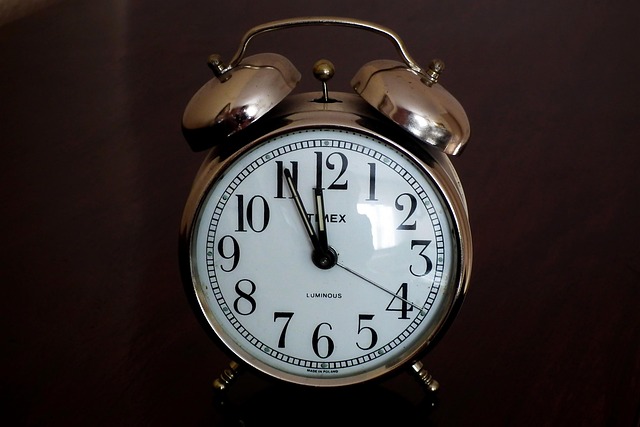
On a Northern Hemisphere horizontal sundial, the shadow cast at solar noon points straight north. When medieval builders mounted early public clocks on church towers, they placed XII (12) at the top of the dial to represent high noon, mirroring the north-facing shadow line of a sundial.
Early clockmakers experimented with several layout styles before settling on today’s familiar dial. Some medieval tower clocks used 24-hour dial faces, while others displayed Italian hours where the day began at sunset. Over time, the 12-hour dual-cycle face won out because large, widely spaced numbers were far easier to read from ground level.
You can discover more about historical timekeeping instruments in our guide to Before Mechanical Clocks: Water Clocks, Hourglasses, and Candle Time, or see surviving medieval mechanisms in The Oldest Working Clocks in the World.
Famous clocks that run counterclockwise
While clockwise direction became the global norm, several notable historic and modern clocks deliberately run counterclockwise:
- Florence Cathedral Clock (Italy): Designed in 1443 by Renaissance artist Paolo Uccello, this 24-hour clock inside the Duomo features a single hand that rotates counterclockwise. It follows ora italica (Italian time), where hour 24 marks sunset rather than midnight.
- Prague Jewish Town Hall Clock (Czech Republic): Located in the historic Josefov quarter, this building features two clock towers. The upper clock displays Roman numerals and turns clockwise. The lower clock features Hebrew letters as numerals and turns counterclockwise, matching the right-to-left reading direction of Hebrew script.
- Bolivia’s Congress Building Clock (La Paz): In June 2014, the Bolivian government inverted the clock face on its National Congress building in Plaza Murillo. The numbers were reversed to count counterclockwise, serving as a official statement of Southern Hemisphere identity—a “clock of the south” reflecting shadow movements in South America.
- Barber Shop Clocks: Specialty wall clocks manufactured with reversed gear trains and mirror-image numbers allow clients seated in styling chairs to read the accurate time through the mirror on the opposite wall.
Before “clockwise”: sunwise, deasil, and widdershins
Before mechanical clocks were widely used, the English language had no word “clockwise.” The term only emerged in the late sixteenth century as mechanical clocks became commonplace in homes and town centers.
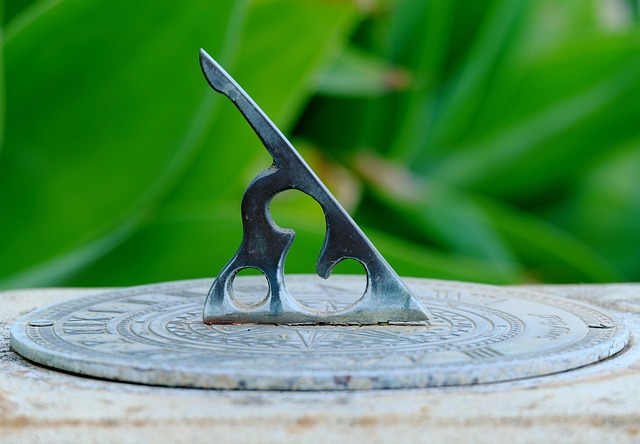
Prior to clocks, people described circular direction in terms of solar movement. Moving in the direction of the sun was called “sunwise” or “sunward.” In Gaelic and Scottish folklore, this direction was known as deasil (or deiseal), meaning movement toward the right hand. Circling a stone structure, church, or marriage altar sunwise was believed to bring luck, health, and prosperity.
The opposite movement—against the path of the sun—was known as widdershins (derived from Middle High German wider-sinnes, meaning “against direction”). Going widdershins was traditionally viewed with superstition and associated with bad fortune or dark magic. Mechanical clockwork turned this age-old natural solar observation into a standardized mechanical directional convention.
How clockwise direction shaped engineering, games, and culture
Once clockmakers standardized clockwise rotation, the convention expanded into mechanical tools, daily hardware, and software design:
- Screws and Fasteners: Standard right-handed screw threads tighten when turned clockwise and loosen when turned counterclockwise, summarized by the rule “righty-tighty, lefty-loosey.”
- Dials and Controls: Volume knobs, thermostats, pressure valves, and light dimmers almost universally increase output when turned clockwise.
- Board Games and Cards: Player turns proceed clockwise around the table in almost all Western card and board games.
- Digital Interfaces: Progress circles, refresh icons, and loading spinners in modern software spin clockwise to convey forward progress.
Modern analog timepieces, including every traditional watch listed at itsdately.com, rely on this exact mechanical heritage. For historical perspective on how timekeeping expanded from tower dials to modern telecommunications, read The Speaking Clock: When People Telephoned to Ask the Time.
One notable exception to the clockwise standard is sports. Athletics tracks, horse racing ovals, and speed skating rinks run counterclockwise (turning left). While early English racing traditions varied, major international sports bodies standardized counterclockwise track movement in the late nineteenth century, partly because most athletes possess a stronger right leg that pushes outward when taking left turns.
For broader historical background on horological mechanical developments, consult Encyclopaedia Britannica — Clock.
Frequently asked questions
Why do sports tracks run counterclockwise when clocks run clockwise?
Modern athletics, horse racing, and speed skating tracks run counterclockwise because nineteenth-century sports organizations standardized left-hand turning. Running counterclockwise allows a right-dominant body to push off with greater force along the turn while keeping the heart side inward.
What language was used before the word counterclockwise was invented?
Before “clockwise” and “counterclockwise” entered common usage in the late 1500s, English speakers used “sunwise” (or Gaelic deasil) to mean moving with the sun, and “widdershins” to describe moving against the sun.
Do clocks in the Southern Hemisphere run backwards?
No, standard commercial clocks in the Southern Hemisphere run clockwise just like clocks in the Northern Hemisphere. Because mechanical clocks were imported and standardized globally during the colonial era, the northern convention was adopted worldwide regardless of latitude.
Why is 12 o’clock placed at the top of a clock face?
12 o’clock is at the top of the clock face because it represents solar noon, when the sun reaches its highest point in the sky. On northern horizontal sundials, the noon shadow points due north (straight ahead), so clockmakers placed 12 at the peak position of the dial face.

About Yasir Hafeez
Yasir Hafeez is the creator of itsdately a free, independent site for clear world time, calendars, and date tools.