Quick answer
This guide explains what is an equinox? The two days the sun crosses the equator in plain language, with the exact figures and how to work them out yourself.
Last updated: August 1, 2026
- Next March equinox
- Saturday, 20 March 2027 — UTC
- Counting down
- 139 days away
- Today
- Sunday, 1 November 2026 · ISO week 44 · day 305 of the year
Computed on every visit from the time-zone database and standard astronomical formulas, so these never go stale. The article below is unchanged.
An equinox is a moment, not a day: the precise instant the center of the Sun crosses Earth’s celestial equator—the imaginary line in the sky projected outward from Earth’s geographic equator. This crossing occurs twice each calendar year, moving north in March and south in September. Around 20 March and 22–23 September, Earth’s tilted rotational axis (inclined at approximately 23.44 degrees) points neither toward nor away from the Sun. As a result, the terminator—the illuminated boundary dividing day from night—runs directly through both the geographic North and South Poles, splitting daylight and darkness into nearly equal portions across every latitude on the planet.
Equinox vs. Equilux: Why Equinox Days Are Not Exactly 12 Hours
The term “equinox” derives from the Latin words aequus (equal) and nox (night), implying a perfect 12-hour division between daylight and dark. However, if you measure local sunrise and sunset on an equinox, you will discover that daylight actually lasts longer than twelve hours. The true date of equal day and night is called the equilux, which occurs several days apart from the astronomical equinox depending on your latitude.
Two distinct optical and geometric factors add extra minutes of daylight on the equinox:
- Solar Disk Definition: Astronomical sunrise is defined as the precise moment the top edge (upper limb) of the Sun appears above the horizon, while sunset ends when the top edge disappears below it. Because the Sun appears in our sky as a disk rather than a point of light—spanning roughly 32 arcminutes (0.53 degrees) in diameter—measuring from edge to edge adds roughly 16 arcminutes of solar motion at both dawn and dusk.
- Atmospheric Refraction: Earth’s atmosphere acts as a spherical lens, bending incoming light rays downward toward the surface. When the geometric center of the Sun is actually 34 arcminutes (0.57 degrees) below the true horizon, refraction lifts the image of the Sun upward into view. We see the Sun before it geometrically rises and after it geometrically sets.
Combined, atmospheric refraction and the Sun’s solar radius elevate the solar disk by about 50 arcminutes (0.83 degrees) relative to its true geometric position. The exact amount of daylight added varies by geographic latitude and the angle at which the Sun intersects the horizon.
| Optical Offset Factor | Angular Measure | Daylight Added at Equator | Daylight Added at 50° Latitude |
|---|---|---|---|
| Solar Disk Radius (Upper Limb) | 16 arcminutes (~0.26°) | ~1 minute 04 seconds | ~1 minute 40 seconds |
| Atmospheric Refraction | 34 arcminutes (~0.57°) | ~2 minutes 16 seconds | ~3 minutes 30 seconds |
| Combined Effect | 50 arcminutes (~0.83°) | ~3 minutes 20 seconds (x2 for dawn/dusk = ~6m 40s) | ~5 minutes 10 seconds (x2 for dawn/dusk = ~10m 20s) |
Because these atmospheric effects extend the visible day, the 12-hour equilux falls a few days before the March equinox and a few days after the September equinox in the Northern Hemisphere. In the Southern Hemisphere, the pattern reverses.
Equinox vs. Solstice: Core Astronomical Differences
The calendar year contains four primary astronomical cardinal points: two equinoxes and two solstices. While equinoxes represent the balance points when the Sun crosses the equator, solstices mark the extreme limits of the Sun’s annual journey north and south.
| Astronomical Event | Approximate UTC Date | Subsolar Point Latitude | Daylight Distribution | Northern Season Start |
|---|---|---|---|---|
| March Equinox | March 19–21 | 0° (Equator) | Nearly equal day/night globally | Astronomical Spring |
| June Solstice | June 20–22 | 23.44° N (Tropic of Cancer) | Longest day in North, shortest in South | Astronomical Summer |
| September Equinox | September 21–24 | 0° (Equator) | Nearly equal day/night globally | Astronomical Autumn |
| December Solstice | December 20–23 | 23.44° S (Tropic of Capricorn) | Shortest day in North, longest in South | Astronomical Winter |
Understanding daylight patterns across seasons requires examining how Earth’s orientation relative to the Sun shifts between these turning points. For a detailed breakdown of day lengths at different locations, see Daylight Hours by Latitude: Why Summer Days Are Longer the Farther North You Go.
Practical Guide: Using the Equinox to Find True East and West
The equinox presents a unique geometry for navigation and outdoor surveying. On any other day of the year, the Sun rises and sets at an azimuth angle that varies depending on your latitude. However, on the equinox, the Sun rises almost exactly due east (90° azimuth) and sets almost exactly due west (270° azimuth) for every location on Earth (excluding the exact geographic poles).
You can use this annual alignment to establish a precise true east-west line on your property or calibrate a magnetic compass without electronic tools.
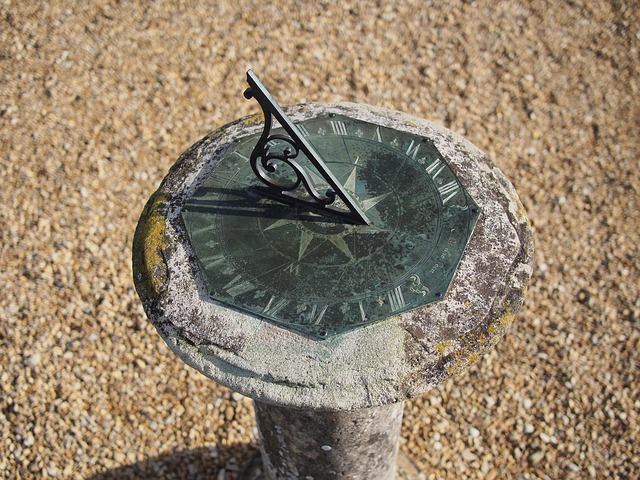
- Prepare Your Equipment: Set up a straight vertical pole or plumb line (a gnomon) on a level patch of ground open to both the morning and evening horizons.
- Record Sunrise or Sunset Position: Stand behind your marker line precisely as the center of the Sun touches the horizon. Sight across the top of your vertical pole toward the Sun and place a ground marker along that sightline.
- Draw Your Cardinal Baseline: A line drawn from your standing point through the sunrise marker points true east. A line drawn toward the sunset marker points true west. A perpendicular line drawn at 90 degrees to this baseline creates an accurate true north-south meridian.
- Calculate Magnetic Declination: Place a magnetic compass along your true east-west ground line. The difference between 90° on your compass needle and your true east ground mark reveals your site’s local magnetic declination.
Common Observation Problems and Solutions
- Problem: Mountainous Horizon. If mountains or tall structures block your flat horizon, the Sun will appear higher in the sky by the time it clears the obstacle, shifting its visual position away from 90° or 270°.
Fix: Use an online solar calculator or astronomical table (such as the U.S. Naval Observatory Astronomical Applications) to find the exact minute of geometric sunrise for your coordinates, or calculate local solar noon when shadows point directly true north-south. - Problem: Magnetic Interference. Local metal structures, underground utility lines, or reinforced concrete rebar can distort magnetic compass readings.
Fix: Perform compass cross-checks at least 15 to 20 meters away from cars, metallic fences, or concrete slabs.
Solar Geometry at Extrema: Equator and Poles
The physical experience of an equinox changes dramatically based on geographic location:

- At the Equator (0° Latitude): The Sun reaches its zenith (90° directly overhead) at local solar noon. A vertical post casts zero shadow on the ground because the subsolar point passes directly across the local latitude.
- At the Poles (90° N and 90° S): The equinox marks the transition point between six months of continuous daylight and six months of continuous polar night. At the North Pole during the March equinox, the Sun does not rise high into the sky; instead, its full disk skims 360 degrees around the horizon over a 24-hour period, slowly climbing higher each day until the June solstice.
Who This General Rule Does Not Suit
While the equinox provides equal distribution of sunlight across most populated regions, these basic seasonal assumptions do not apply to all observers:
- Polar Residents: Observers inside the Arctic and Antarctic Circles experience extreme solar angles where twilight lasts for weeks, rendering standard 12-hour day/night calculations impractical.
- High-Altitude Aviators and Navigators: Flight crews operating at 35,000 feet view a lower horizon line (dip of the horizon), extending visible daylight by several minutes beyond surface calculations.
Calendar Drift, Leap Years, and Axial Precession
Although our civil calendar sets March 20 and September 22–23 as regular markers, the exact time of the equinox shifts constantly. Earth takes approximately 365.2422 solar days (a tropical year) to complete one orbit around the Sun—about 5 hours, 48 minutes, and 45 seconds longer than our standard 365-day calendar year.
Without adjustment, the equinox moment would drift about 6 hours later every year. The Gregorian calendar corrects this drift by adding a leap day every four years (and omitting leap days on century years not divisible by 400). This intervention resets the astronomical equinox back into a tight 48-hour window on our calendar.
On much longer timescales, Earth’s axis undergoes a slow, conical wobble known as axial precession (or precession of the equinoxes). Driven by the gravitational tug of the Moon and Sun on Earth’s equatorial bulge, Earth’s axis completes one full wobble approximately every 25,772 years. Precession gradually shifts the position of the equinoxes relative to the background stars by about 1 degree every 72 years. Because of this slow movement, the astrological signs assigned thousands of years ago no longer line up with the physical constellations sitting behind the Sun on the equinox dates today.
To explore how planetary rotational periods compare across our solar system, read How Long Is a Day on Other Planets?. To understand how ancient cultures measured smaller units of time, see Why Are There 60 Seconds in a Minute? Blame Babylon.
Cultural Traditions, Satellite Interference, and Auroras
Both upcoming equinoxes appear with exact dates in the holidays and astronomy list at itsdately.com, alongside the solstices that complete the year’s four turning points.
The equinoxes anchor significant cultural and historical milestones worldwide:
- Nowruz: The Persian New Year begins at the precise astronomical instant of the March equinox, marking the renewal of spring across Central Asia and the Middle East.
- Easter Computus: In Western Christian tradition, Easter Sunday is calculated as the first Sunday following the first full moon that occurs on or after the ecclesiastical March equinox (fixed on March 21).
- Higan: Japan observes official public holidays during both equinoxes for Higan, a Buddhist tradition lasting seven days centered on each equinox, dedicated to honoring ancestors and visiting family graves.
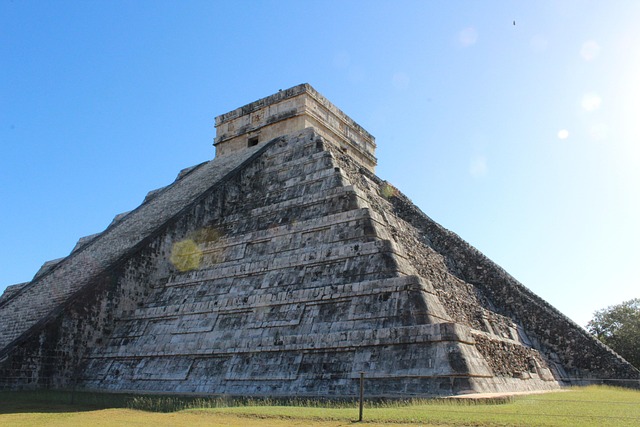
- Architectural Alignments: Ancient builders aligned monuments to solar geometry. At Chichén Itzá in Mexico, the afternoon Sun on the equinox casts shadows down the staircase of the El Castillo pyramid, creating the illusion of a slithering feathered serpent (Kukulkan). At Cambodia’s Angkor Wat, the Sun rises directly over the central tower during the equinox.
Modern technological infrastructure is also impacted by equinox geometry:
- Geostationary Satellite Eclipse Season: Geostationary satellites orbit high above Earth’s equator. During the weeks surrounding each equinox, these satellites pass directly through Earth’s shadow cone every 24 hours, forcing spacecraft to rely on onboard batteries.
- Solar Outages: For a few minutes each day around the equinox, the Sun lines up directly behind geostationary communications satellites relative to ground dish antennas. The intense electromagnetic radiation from the Sun creates broadband radio noise, leading to temporary signal dropouts for satellite television and telecommunications link stations.
- Geomagnetic Activity and Auroras: Auroral displays (the Northern and Southern Lights) show a statistically verified peak around both equinoxes. Under the Russell-McPherron effect, Earth’s magnetic dipole tilts near the equinoxes in a way that aligns favorably with the interplanetary magnetic field carried by the solar wind, allowing solar particles to penetrate Earth’s magnetosphere more easily.
Civic and weather organizations also treat these dates differently. Meteorologists divide seasons into neat three-month blocks based on temperature cycles (March 1 for spring, September 1 for autumn), whereas astronomers define seasons by the celestial alignment of the equinoxes and solstices. Both systems measure real world patterns—the sky’s geometry versus terrestrial heat budgets.
Frequently asked questions
Why is the equinox not exactly 12 hours of daylight and 12 hours of night?
Daylight length exceeds 12 hours on the equinox because sunrise is measured from the top rim of the solar disk (not its center) and because Earth’s atmosphere refracts sunlight, lifting the Sun’s visual image above the horizon before it geometrically rises. The true 12-hour day/night split—the equilux—occurs a few days away from the equinox.
How does the equinox date change from year to year?
Because Earth’s tropical year is roughly 365.2422 days, the equinox moment shifts forward by approximately 5 hours and 49 minutes each calendar year. The quadrennial insertion of a leap day in February pulls the date back, maintaining the equinox between March 19–21 and September 21–24 in the Gregorian calendar.
What is the difference between an equinox and a solstice?
An equinox occurs when the Sun crosses Earth’s equator, producing equal day and night across the planet. A solstice occurs when the Sun reaches its maximum northern or southern distance from the equator (over the Tropics of Cancer and Capricorn), resulting in the longest or shortest daylight periods of the year.
Why do auroras occur more frequently near the equinoxes?
Near the equinoxes, Earth’s magnetic poles are oriented relative to the solar wind in a way that aligns Earth’s magnetic field with the interplanetary magnetic field (the Russell-McPherron effect). This alignment opens magnetic gaps that allow energetic solar particles to enter Earth’s atmosphere, sparking brighter auroral activity.
Related on itsdately: Daylight Hours by Latitude: Why Summer Days Are Longer the Farther North You Go · How Long Is a Day on Other Planets? · Why Are There 60 Seconds in a Minute? Blame Babylon
Further reading: U.S. Naval Observatory Astronomical Applications
Related read: Phila Sunset Times: Your August Guide to Golden Hours.