- Greenwich today
- sunrise 06:52, solar noon 11:44, sunset 16:37
- Today
- Saturday, 31 October 2026 · ISO week 44 · day 304 of the year
Computed on every visit from the time-zone database and standard astronomical formulas, so these never go stale. The article below is unchanged.
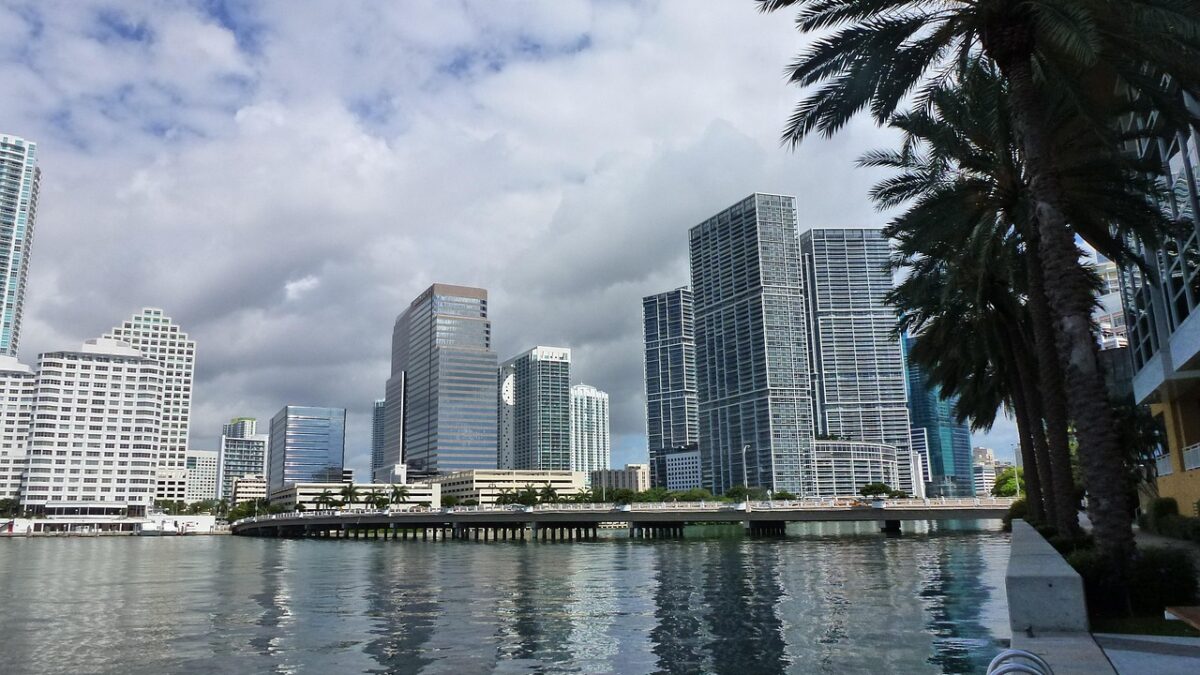
Because Miami faces east toward the Atlantic Ocean, sunsets occur over Biscayne Bay and the Everglades mainland rather than the ocean, casting warm golden light onto the city skyline. Arriving at western-facing spots like South Pointe Park, the Venetian Causeway, or Key Biscayne at least 45 minutes before sunset ensures you catch the full visual display as the light transforms.
This guide explains how South Florida’s geography and atmospheric conditions create these colors, details seasonal timing across golden hour, horizon crossing, and blue hour, and outlines the best viewing locations from coastal parks to elevated rooftop bars.
Where and How to Watch the Sunset in Miami
Because Miami sits on Florida’s east coast, the sun sets over Biscayne Bay and the Everglades mainland rather than the ocean, casting warm golden light back onto the skyline. The best viewing spots are along western-facing shores like South Pointe Park, the Venetian Causeway, and Key Biscayne 45 minutes before twilight.
Whether you want a casual blanket setup on a park lawn, a craft cocktail on a high-rise balcony, or a boat deck floating on calm bay waters, matching your viewing location to the season and weather conditions ensures you see the sky at its absolute best.
Why does a Miami sunset look the way it does?
Geography dictates the mechanics of every sunset in South Florida. Because Miami faces east toward the Atlantic Ocean, visitors expecting to watch the sun drop directly into open ocean waves are often surprised to learn that Miami sunsets occur over the land and inner waterways. As the sun descends into the west, it sinks behind Biscayne Bay, the urban mainland, and the vast expanse of the Florida Everglades.
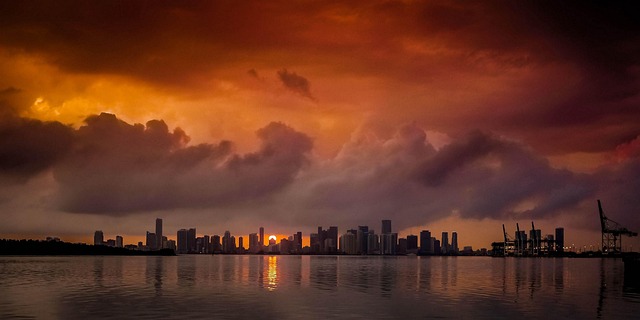
This geographical setup creates a distinct visual dynamic. Instead of dark ocean water sitting beneath the setting sun, Miami offers a dramatic backdrop where natural golden light interacts with reflective mirror glass towers, island palm trees, and wide saltwater bay basins. The low angle of the setting sun throws long shadows toward the east, lighting up the eastern faces of coastal high-rises and illuminating clouds hanging above the Atlantic.
Atmospheric conditions play an equally significant role in color intensity. According to the National Oceanic and Atmospheric Administration, atmospheric aerosols, particles, and water vapor molecules scatter sunlight as it passes through thicker layers of the atmosphere at low angles. Shorter wavelengths of light, such as blue and violet, scatter away first, allowing longer wavelengths like deep red, vivid orange, and magenta to dominate the sky.
In South Florida, humidity levels and coastal cloud structures amplify this phenomenon. During late afternoon in late spring and summer, moisture evaporating from the Everglades builds up towering cumulus cloud formations along the inland weather front. When these high-altitude cloud banks linger after sunset, they act as natural reflection screens, catching sunlight from below the horizon line and glowing in deep pinks and purples for up to 30 minutes after dusk.
When is the best time to watch the sunset in Miami?
Exact sunset times shift throughout the year due to Miami’s subtropical latitude. During the winter solstice in late December, the sun sets as early as 5:30 PM EST. By mid-summer in July, sunset occurs around 8:15 PM EDT. For example, during late summer around August 3, sunset drops at approximately 7:54 PM EDT. To track seasonal changes and verify precise daily and monthly Miami sunset times, checking real-time astronomical schedules on sunrise-sunset.org ensures accurate planning before you leave your hotel or home.
Catching the best lighting requires thinking beyond the precise minute the sun touches the horizon. The entire display unfolds over a 90-minute window split into three distinct visual stages:
- Golden hour (45 to 30 minutes before sunset): The sun sits low in the sky, casting soft, warm, amber light across the landscape. Contrast is low, shadows stretch out long and dramatic, and skin tones look naturally warm. This is the optimal time for outdoor portraits and wide landscape shots.
- Horizon crossing (15 minutes before to exact sunset): The solar disc lowers beneath the western tree lines or urban skyline. Brightness drops quickly, and rich oranges, yellows, and deep reds flood the lower sky.
- Blue hour and afterglow (10 to 30 minutes after sunset): After the sun drops out of sight, high-altitude clouds continue reflecting indirect sunlight. The sky transitions from orange to magenta and deep indigo. At the same time, interior lights in city skyscrapers flicker on, creating a high-contrast blend of natural sky glow and artificial urban lighting.
To capture all three stages, plan to arrive at your selected viewing site at least 45 minutes before the listed sunset time. Arriving early gives you time to find parking, walk to a prime spot along the water, and settle in before the golden hour light fades.
Where are the best spots to watch a Miami sunset?
Miami offers a wide range of sunset locations, each tailored to different visual preferences, budgets, and social atmospheres. Knowing where to go depends on whether you want natural oceanfront parkland, active pedestrian paths, elevated cocktail lounges, or quiet bayside parks.
South Pointe Park and Pier
Situated at the southernmost tip of South Beach (1 Washington Avenue), South Pointe Park provides one of the most complete viewing experiences in the city. The park features manicured green lawns, elevated walking paths, and a 450-foot ocean pier extending into Government Cut.
Because the park wraps around the southwest edge of South Beach, you can stand along the western shoreline and watch the sun drop directly behind the Downtown Miami skyline and Fisher Island. Cruise ships and container vessels passing through the Government Cut shipping channel add motion to the foreground.
- Who it suits: Families, casual strolls, landscape photographers, and picnic setups.
- Trade-offs: Parking in the South Pointe garage or nearby meters fills up quickly on warm weekends. Expect heavy foot traffic on the pier and along the perimeter path.
The Venetian Causeway
Connecting Downtown Miami to South Beach through a chain of residential islands, the Venetian Causeway is a favorite spot for walkers, runners, and cyclists. The low-slung bridges between San Marco Island and San Marino Island offer unobstructed, 360-degree views of Biscayne Bay.
Standing on the pedestrian path along the western spans gives you a clear line of sight across open bay water directly toward the setting sun and the skyline. The water is often calm, reflecting the changing sky colors like a sheet of glass.
- Who it suits: Fitness enthusiasts, evening walks, and photographers looking for uncluttered horizon lines without beach crowds.
- Trade-offs: There are no dedicated public parks or rest stops along the bridge sections, and street parking on the residential islands is strictly restricted to residents. You must park near Edgewater on the mainland or on Belle Isle and walk out.
Key Biscayne and the Rickenbacker Causeway
Driving across the Rickenbacker Causeway toward Key Biscayne places you directly in the center of Biscayne Bay. The causeway features several pull-off areas, including Hobie Island Beach Park and Virginia Key.
Further south on Key Biscayne itself, Bill Baggs Cape Florida State Park offers quiet beach access along the western bay shore. While the historic Cape Florida Lighthouse faces south and east, the western trails and marina area provide direct views across the bay toward the Everglades mainland.
- Who it suits: Romantic picnics, paddleboarders launching at dusk, and panoramic views of the entire Miami urban skyline framed by open water.
- Trade-offs: Driving across the Rickenbacker Causeway incurs a toll fee. Weekend return traffic back toward the mainland can choke near the bridge merge points.
Elevated rooftop bars in Downtown and Brickell
If you prefer a lively atmosphere with craft cocktails and music, Miami’s high-rise rooftop bars provide expansive aerial vantage points. Rooftops elevated 15 to 40 stories above ground allow you to look over western urban sprawl and see the sun set straight down the horizon.
- Sugar at EAST Miami (Brickell): Perched on the 40th floor of the EAST Miami hotel, Sugar features a lush Asian garden atmosphere with western views looking out toward the Miami River and western Dade County.
- Area 31 at the Kimpton Epic Hotel (Downtown): Located on the 16th-floor pool deck, Area 31 sits right where the Miami River enters Biscayne Bay, delivering wide views of Brickell skyscrapers catching the late afternoon light.
- Rosa Sky (Brickell): Located on the 22nd floor, Rosa Sky offers wide western exposures that highlight twilight city lights coming on as the sky turns deep purple.
- Who it suits: Dates, nightlife, group celebrations, and social outings.
- Trade-offs: High drink prices, enforced dress codes, minimum spend limits, and required advance reservations during peak weekend hours.
Matheson Hammock Park and Coconut Grove
Located along Old Cutler Road in Coral Gables, Matheson Hammock Park is a historic coastal park known for its circular man-made lagoon framed by native hardwood hammocks and mangroves.
The park’s western shoreline along the boat marina and lagoon offers peaceful views across upper Biscayne Bay. The quiet natural setting contrasts sharply with the energetic beach scenes of South Beach.
- Who it suits: Quiet nature observation, bird watching, and avoiding urban noise.
- Trade-offs: Vehicle admission fees apply at the park entrance gate, and midges or mosquitoes can proliferate along mangrove shores near dusk.
What should you expect on a Miami sunset cruise?
Taking to the water on a boat tour provides an ever-shifting, 360-degree perspective of the sky and city skyline that you cannot get from land. Sunset cruises generally navigate the sheltered waters of Biscayne Bay, cruising past Star Island, PortMiami, and the Brickell financial district.

Most commercial tours depart from Bayside Marketplace in Downtown Miami or marinas along South Beach and Coconut Grove. Vessel choices range from large multi-level passenger catamarans offering live music and cash bars to private luxury yachts and intimate sailboat charters.
Expect tour durations to run between 90 minutes and two hours. According to tourist information published on the Miami and Beaches official tourism website, visitor options include guided historic sightseeing cruises as well as specialized evening sunset excursions.
- Cost: Basic public catamaran tours generally cost between $35 and $70 per person. Higher-end open-bar or dinner cruises range from $90 to $150 per person.
- Advantages: Unobstructed horizons without buildings or crowds blocking your camera lens; cooling ocean breezes; framed views of luxury island mansions glowing in golden light.
- Disadvantages: Boat engine vibration and deck movement make long-exposure photography challenging; departure schedules are rigid, leaving no flexibility if weather conditions suddenly shift.
How to plan your sunset trip step by step
To make sure your evening goes smoothly, follow these practical steps to prepare before heading out:
- Check atmospheric weather forecasts: Look beyond basic rain indicators. Check atmospheric cloud coverage percentages using standard weather apps. A completely clear sky yields a brief, plain sunset, whereas 30% to 50% high-altitude cloud cover (cirrus or high altocumulus) creates the most vibrant pink and orange displays. Heavy low-hanging storm clouds will block the sun entirely.
- Verify exact timing: Look up the exact sunset time for Miami on your specific date using timeofsunrise.com. Calculate your arrival time by subtracting 45 to 60 minutes from that listed time.
- Account for peak rush hour traffic: Miami traffic experiences severe congestion between 4:30 PM and 7:00 PM on weekdays. Major thoroughfares like I-95, the MacArthur Causeway, and the Rickenbacker Causeway frequently back up. Allow an extra 30 to 45 minutes of transit time if traveling from inland hotels toward bayfront causeways or beach zones.
- Secure parking ahead of time: Identify municipal garages near your target location rather than relying on limited street parking. PayByPhone apps are widely used throughout Miami-Dade County; download and configure the app on your smartphone beforehand to streamline parking payments.
- Bring waterfront essentials: Pack insect repellent if visiting mangrove areas like Matheson Hammock or Key Biscayne, as mosquitoes emerge at dusk. Bring a lightweight blanket or lawn chairs if visiting South Pointe Park, along with a polarising filter or tripod if planning serious photography.
How to take great photos of a Miami sunset
Capturing vivid photos of a sunset requires balancing extreme light contrasts between the bright western sky and the darker foreground elements like water, palm trees, and buildings.
- Control exposure manually: When shooting with a smartphone or digital camera, tap or focus on the bright sky near the sun to pull down the overall exposure. This prevents blown-out white highlights in the clouds and deepens color saturation in the reds and oranges.
- Embrace silhouettes: Position interesting foreground objects—such as royal palm trees, sailboat masts, or historic piers—directly between your camera lens and the setting sun. Underexposing the scene converts these objects into crisp dark silhouettes against the glowing sky.
- Use a tripod for blue hour: As natural light fades 15 minutes after sunset, camera shutter speeds slow down. Using a compact tripod or stablising your camera against a sturdy ledge allows you to capture clean, low-ISO shots of the twilight sky and glowing city skyscraper windows without blur or digital noise.
- Look behind you: One common oversight is focusing entirely on the western horizon. During golden hour, turning around toward the east reveals warm golden light reflecting off glass high-rises and illuminating eastern cloud banks above the Atlantic Ocean.
Which Miami sunset experience is right for you?
Comparing key features helps you select the best spot based on your budget, group size, and preferred atmosphere:

| Location Type | Atmosphere | Viewpoint | Cost per Person | Crowd Level | Best For |
|---|---|---|---|---|---|
| Beach & Waterfront Parks (e.g., South Pointe Park) | Relaxed, scenic, outdoor, family-friendly | Skyline and Biscayne Bay from ground level | Free (parking extra) | High on weekends and holidays | Casual outings, picnics, photography |
| Rooftop Bars (e.g., Area 31, Sugar) | Upscale, energetic, social, cocktail lounge | Elevated cityscape, wide western horizon | High (drinks, food, minimums) | Moderate to high, reservations needed | Date nights, celebrations, nightlife views |
| Sunset Cruises (e.g., Biscayne Bay tours) | Romantic, festive, nautical, memorable | Dynamic 360-degree open water perspective | Moderate to high (ticketed tours) | Moderate, restricted by boat capacity | Special occasions, unique photo angles |
| Causeways & Bridges (e.g., Venetian Causeway) | Active, breezy, calm, unpretentious | Direct bay views across water to mainland | Free (toll fees may apply) | Moderate, mostly local pedestrians | Walking, jogging, quiet landscape viewing |
What common mistakes spoil a Miami sunset view?
Avoiding a few common missteps can save your evening from frustration:
- Looking east on ocean beaches: Many first-time visitors head to Ocean Drive or South Beach’s eastern sandy shores expecting the sun to dip into the ocean waves. Because South Beach faces east toward the Atlantic Ocean, the sun actually sets behind the hotels lining Ocean Drive, throwing the beach into shadow early. Walk south to South Pointe Pier or west to Biscayne Bay to see the sun itself drop.
- Arriving right at the listed sunset minute: Showing up at the exact sunset time means you miss the entire golden hour light show. Also, finding parking and walking to the edge of the water can take 20 minutes, leaving you looking at twilight rather than sunset.
- Leaving as soon as the sun dips below the horizon: The vast majority of viewers pack up their things the second the solar disc vanishes. However, the most vivid colors often occur 15 to 25 minutes after sunset during the afterglow, when light bounces off upper-atmospheric clouds.
- Ignoring bridge tolls and causeway bottlenecks: Driving onto Key Biscayne via the Rickenbacker Causeway involves toll gantries, and leaving the island right after sunset joins a single bottleneck lane back to I-95. Factor toll fees and extra exit time into your plans.
Frequently asked questions
What time is sunset in Miami?
Sunset times in Miami shift across the year, ranging from approximately 5:30 PM EST in late December to around 8:15 PM EDT in July. Checking daily astronomical tables on local forecast sites ensures you get exact timing for your travel date.
Can you see the sunset over the ocean in Miami?
No, because Miami is located on Florida’s east coast, the sun sets in the west over Biscayne Bay, the city skyline, and the Everglades mainland rather than dropping into the Atlantic Ocean. However, western bay shores offer stunning sunset reflections across tranquil saltwater basins.
Are the best sunset spots in Miami free to access?
Yes, many top locations—including South Pointe Park, the Venetian Causeway pedestrian paths, and waterfront promenades along Downtown Miami—are free and open to the public. You only need to pay for vehicle parking or public transit.
Which season offers the clearest sunset views in Miami?
The dry winter months from November through April bring lower humidity, cooler temperatures, and fewer heavy rainstorms, resulting in crisp, clear horizon lines. Summer months bring dramatic, towering cloud structures that produce colorful afterglows when storm fronts clear.
How early should you arrive for golden hour in Miami?
Plan to arrive at your viewing location at least 45 to 60 minutes before the scheduled sunset time. Arriving early gives you enough time to park, walk to the shore, and enjoy the warm light transition of the golden hour in Miami before twilight begins.

About Yasir Hafeez
Yasir Hafeez is the creator of itsdately a free, independent site for clear world time, calendars, and date tools.